
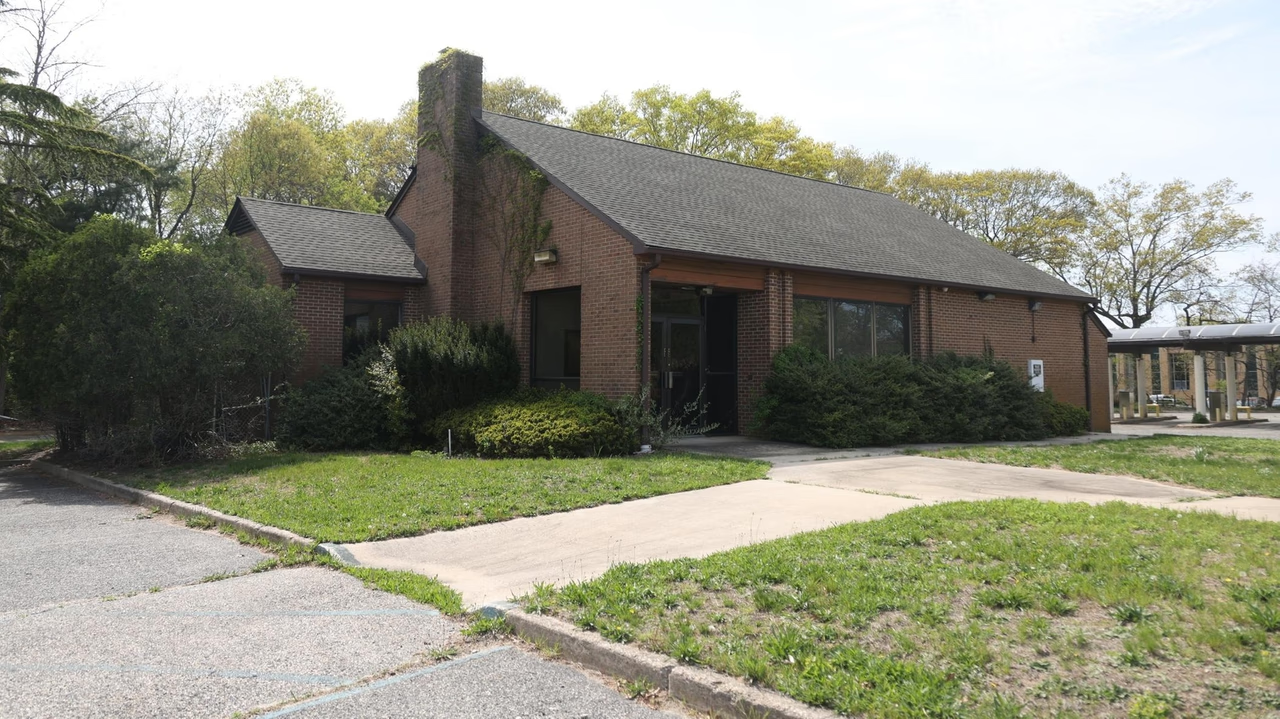
A developer aiming to establish a cannabis shop at 1201 Ostrander Avenue in Riverhead has initiated a lawsuit against the town after the zoning board of appeals denied a variance for the location. This legal action underscores the challenges faced by cannabis entrepreneurs in the area following the opening of two dispensaries last fall.
Tink & E. Co. Inc., the company behind the proposed shop, argues that the town’s zoning regulations are stifling its plans. The site, a former bank, is classified as retail but lacks access from Old Country Road, which is a requirement for cannabis shops under local zoning rules. The lawsuit has drawn interest from two additional developers who are pursuing their own dispensary plans on Old Country Road, as the court’s decision could significantly influence their projects.
Riverhead recently allowed recreational cannabis sales and revised its zoning laws to facilitate more dispensaries. However, the town’s regulations prevent cannabis shops from operating within 2,500 feet of each other. As a result, the future of the three dispensary proposals remains uncertain.
State Supreme Court Justice Paul M. Hensley issued a temporary restraining order on the town, barring it from issuing permits for other dispensaries until the lawsuit is resolved. This order, however, was lifted after other developers intervened.
Riverhead Supervisor Tim Hubbard has refrained from commenting specifically on the lawsuit but emphasized that the town is trying to manage the number of dispensaries in any given area. He stated that applications are processed on a first-come, first-served basis, provided they meet all licensing and regulatory requirements.
In addition to Tink & E. Co.’s proposed shop, applicant Brian Stark is seeking to open a dispensary at 1086 Old Country Road, which is situated 1,600 feet from the Tink shop. Stark’s proposal is contentious due to its proximity to Riverhead High School, which is within the required distance set by the town’s regulations.
Martha Reichert, an attorney representing Stark, criticized the local zoning laws, claiming they contradict state guidelines regarding distances from schools. She pointed out that the school is physically separated from the proposed dispensary site by a shopping center and a four-lane road, arguing that there is no direct connection between the students and the cannabis shop.
Meanwhile, another developer, Peter Moutafis, is pursuing plans for a dispensary at 840 Old Country Road, which is currently a car dealership. Moutafis’ proposal does not require a variance, as the site is compliant with town zoning laws. This could complicate the approval process for Stark’s and Tink’s dispensaries.
Taylor Randi Lee, a spokeswoman for the state Office of Cannabis Management, confirmed that all three proposed dispensaries are approved retail licensees. While there has been limited public opposition to these plans, one resident expressed concerns about Riverhead becoming a hub for cannabis activity during a town meeting.
The legal battle and ongoing zoning discussions reflect the broader challenges that local governments face as they adapt to the evolving cannabis industry. As interest in cannabis businesses grows, towns like Riverhead must find a balance between regulation and the economic opportunities presented by this emerging market.



 German
  English
  Spanish
  Czech
Czech