
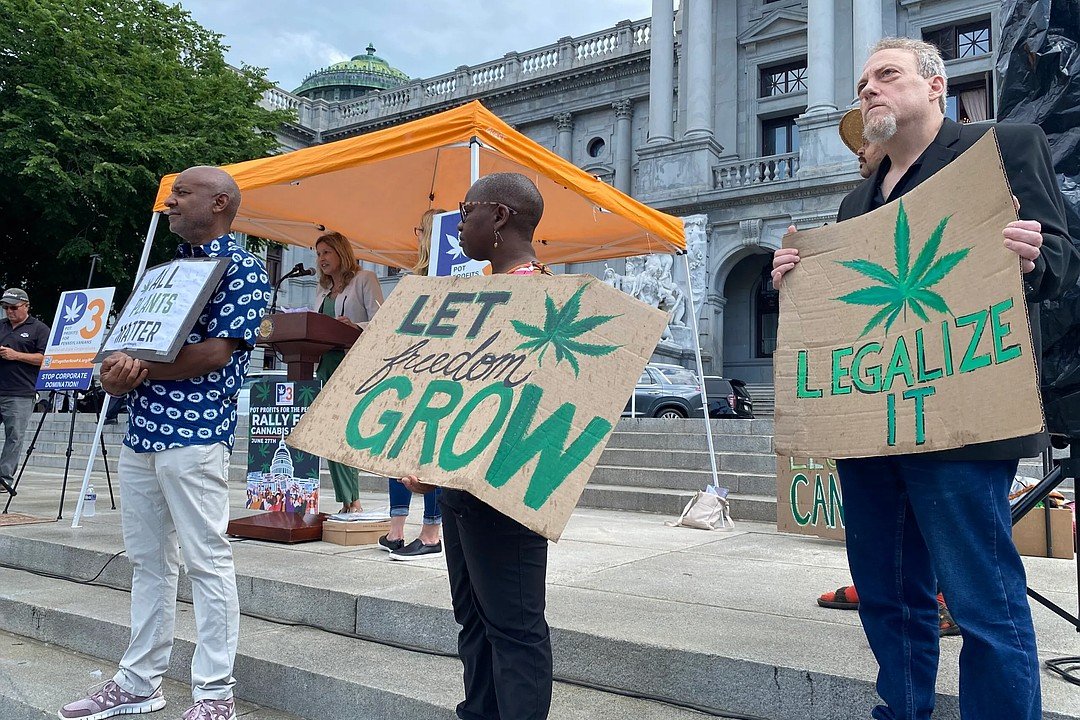
In 2024, pro-cannabis interests invested at least $1.6 million to lobby the Pennsylvania legislature as lawmakers considered a legalization plan that could significantly benefit existing dispensaries and growers. Democratic Governor Josh Shapiro has urged the legislature to approve recreational cannabis sales for adults, forecasting that it could generate $1.3 billion in revenue for the state over the first five years.
To achieve this goal, Shapiro requires support from a majority of lawmakers in the Democratic-controlled House and the Republican-led Senate. While there appears to be strong backing in the House, Democrats are still negotiating how to structure the cannabis industry in Pennsylvania.
However, in the Senate, many lawmakers, particularly those in Republican leadership, have raised concerns about public health and safety related to cannabis legalization. Despite this, proponents of legalization are presenting various proposals to shape the future of the industry.
Some House Democrats are advocating for the establishment of state-owned stores for recreational cannabis sales, similar to how Pennsylvania manages liquor sales. They argue that this approach would maximize revenue for the state and prevent a few large corporations from monopolizing the market. Meanwhile, a bipartisan group in the Senate has suggested that existing medical sellers be allowed to expand into the recreational market. Currently, over 40 companies operate 186 medical dispensaries in Pennsylvania, collectively generating nearly $7 billion in sales from 2020 to the end of 2024.
The potential expansion into recreational sales is expected to further enhance profits for these companies. As a result, major multistate cannabis companies like Trulieve and Cresco Labs have spent substantial amounts on lobbying efforts in 2024, with an analysis from Spotlight PA revealing that 26 companies and trade associations collectively spent over $1.6 million.
Of this amount, more than $800,000 was contributed by cannabis companies with operations in multiple states, with 19 having a presence in Pennsylvania. Although lobbying disclosures indicate how much was spent, they do not specify which lawmakers or legislation were targeted, nor do they detail the specific lobbying activities.
The largest lobbying expenditure was made by Trulieve, which operates dispensaries in nine states, spending over $210,000. This total included $165,000 for direct communications and $45,000 for indirect efforts aimed at influencing legislation. However, Trulieve’s lobbyists did not respond to requests for further information regarding their activities.



 English
  Spanish
  German
  Czech
Czech