
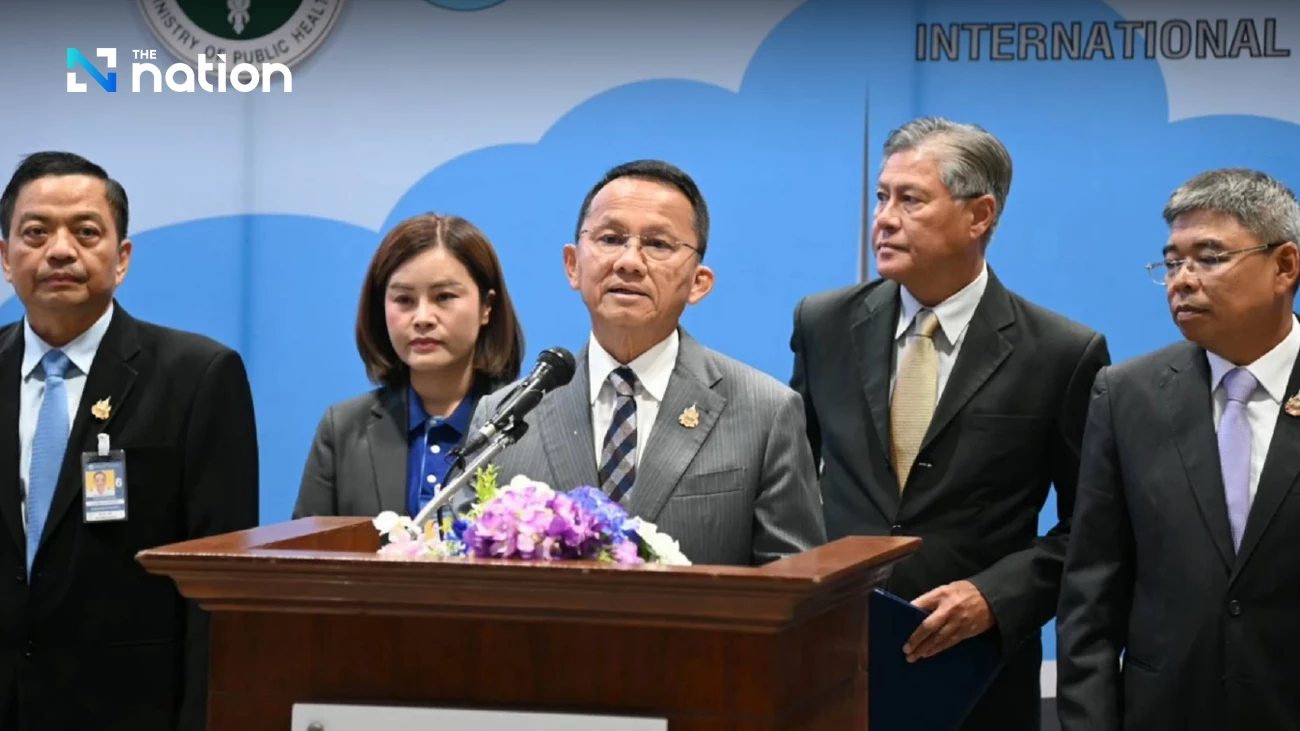
In a bid to combat illegal cannabis exports, Thailand’s Health Ministry will require all cannabis users, both Thai and foreign, to present a medical certificate for legal access to cannabis. This announcement is expected within 40 days. Public Health Minister Somsak Thepsuthin made the statement during a press conference focused on enforcing cannabis regulations established under the 2022 Controlled Herb Announcement.
Somsak revealed that there have been reports of cannabis smuggling from Thailand, particularly through airports such as Don Mueang and Suvarnabhumi. To address this issue, a joint committee has been formed, led by the ministry’s Permanent Secretary, and includes representatives from the Customs and Agriculture departments, the Immigration Bureau, Airports of Thailand (AOT), and other relevant agencies.
“Cannabis has been illicitly exported from Thailand, impacting countries like the UK, India, Pakistan, and Hong Kong. Significant seizures have occurred, including 73 kilograms from three cases at Suvarnabhumi Airport,” said Somsak. He emphasized that cannabis can only be exported with proper authorization, and those caught exporting without permits face severe penalties, including imprisonment.
Despite public concerns about lax enforcement, Somsak assured that authorities have been actively controlling illegal exports and will implement stricter regulations on cannabis use in the country. The upcoming requirement for medical certificates aims to limit cannabis access and ensure it is obtained only for legitimate medical reasons.
“We warn those attempting to export cannabis illegally without permits that they face imprisonment. Enforcement will now be strictly intensified,” he stated.
Cannabis was recently removed from the narcotics list as part of a legal reform that consolidated 30 laws into a single drug code. It is now classified as a controlled herb, similar to a mild narcotic. The minister noted that regulating cannabis under herbal law will be quicker and more effective than pursuing traditional drug law reforms, which can take up to two years.
The Department of Thai Traditional Medicine is currently soliciting public input on the new regulations. There appears to be a divide in public opinion regarding cannabis; some advocate for stricter controls, while others support recreational use. Pawina Chariyathitipong, Acting Director of Airports of Thailand, confirmed their cooperation in enforcing the new law and highlighted that initial crackdowns at airports have led to the seizure of hundreds of kilograms of cannabis.
To enhance detection efforts, new technologies, including K9 units, are being considered as current X-ray technology has limitations. Major smuggling routes have been identified, particularly involving countries like India and the UK.
Dr. Somruk Jeungsaman, Director-General of the Department of Thai Traditional Medicine, indicated that future cannabis sales will require medical certification for specific conditions, such as epilepsy, headaches, pain, and insomnia. There may also be usage limits, with potential legal repercussions for misuse beyond prescribed amounts.
Ras Chaleechan, Vice Minister for Foreign Affairs, underscored the ministry’s commitment to combating cannabis smuggling by foreigners. The government is working with international organizations and diplomatic missions to raise awareness about legal penalties and prevent scams that falsely claim cannabis can be legally exported.
As the regulations evolve, Thailand aims to create a controlled and safe framework for cannabis use while effectively addressing illegal exports.


 English
  Spanish
  German
  Czech
Czech