
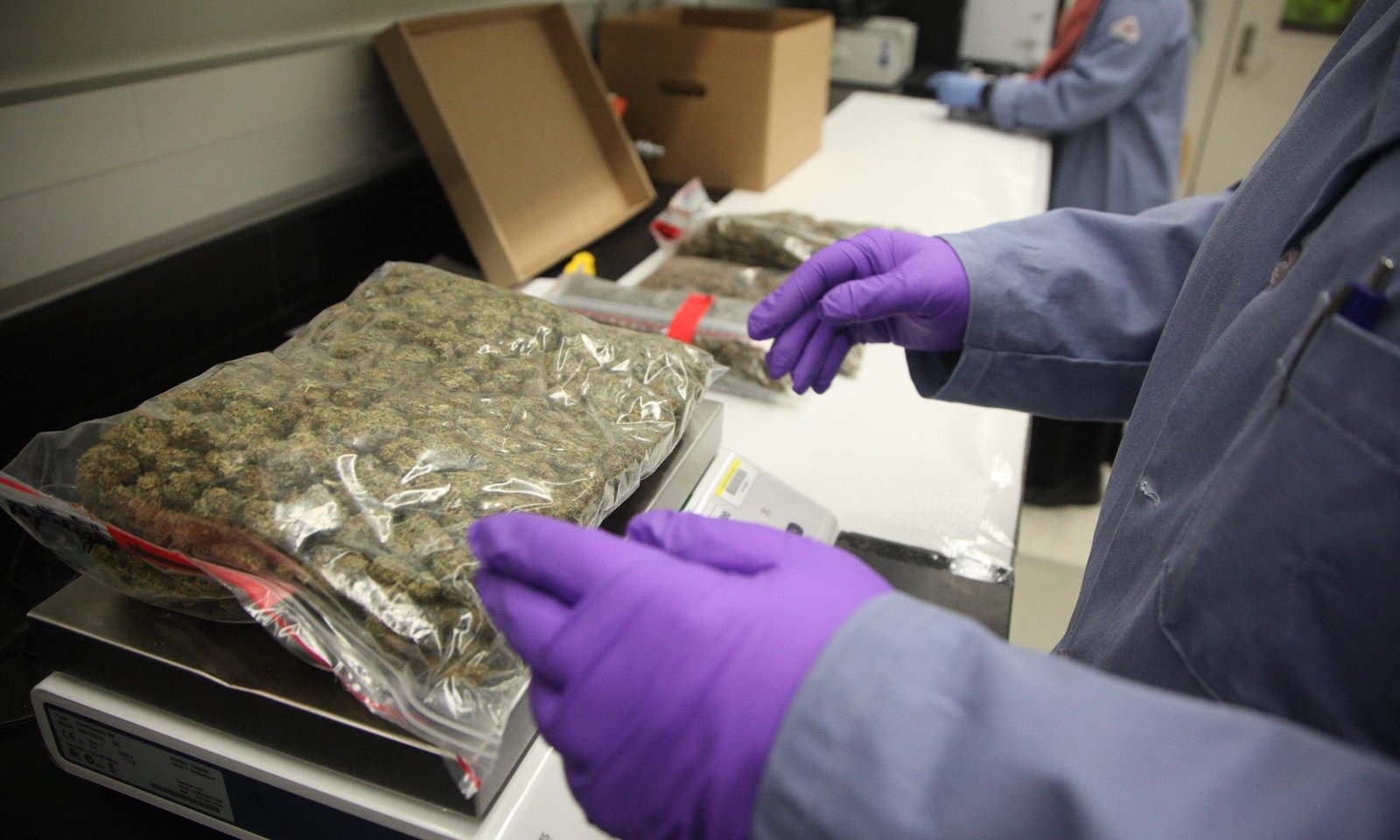
The National Institute of Standards and Technology (NIST) has released a report advocating for standardized drying methods in the cannabis industry, particularly for hemp. This report is part of NIST’s Cannabis Laboratory Quality Assurance Program (CannaQAP), which aims to improve the accuracy of laboratory testing for cannabis products.
Published last month, the 29-page report highlights significant discrepancies in moisture levels among various facilities, attributed to differing drying techniques. NIST found that only 20 percent of the 89 participating laboratories reported moisture levels within the agency’s target range. On average, the moisture levels exceeded the target by approximately 2 percent.
The report emphasizes the importance of consistent drying methods to achieve reliable measurements. Laboratories primarily used two methods: thermogravimetric analysis and an unlisted method categorized as ‘other.’ However, many inaccuracies stemmed from improper sample storage and weighing inconsistencies, leading to systematic errors.
Walter Brent Wilson, a NIST research chemist and co-author of the report, noted that accurate measurement of moisture is essential. Federal regulations calculate cannabinoid content based on dry weight, making moisture levels critical for compliance and safety assessments of cannabis products. Additionally, safety thresholds for toxic elements are also based on dry mass.
The current report marks the start of Exercise 3 in the CannaQAP, which will include further studies on cannabinoid testing and toxic element analysis. NIST aims to release additional reports related to these topics by the end of 2026.
The findings come at a time when cannabis regulations are rapidly evolving. A previous NIST report indicated that a large percentage of products marketed as hemp actually contained more than 0.3 percent THC, classifying them as marijuana under federal law. This underscores the critical need for accurate testing and regulation in the cannabis sector.
In parallel, NIST is working on developing cannabis breathalyzer technology, aiming to facilitate law enforcement’s ability to assess drugged driving. A scheduled workshop on this topic was postponed but is now set for September, where stakeholders will discuss challenges and advancements in breathalyzer technology.
NIST’s initiatives align with ongoing federal efforts to enhance cannabis research. Recently, the University of Mississippi announced a new collaboration with the National Institutes of Health (NIH) to establish a Resource Center for Cannabis and Cannabinoid Research (R3CR). This center aims to provide regulatory guidance and research support, contributing to the scientific understanding of cannabis.
Despite these advancements, the Department of Government Efficiency (DOGE) recently canceled funding for a marijuana potency monitoring program, indicating a mixed landscape for federal cannabis research funding. The cancellations have raised concerns among advocates for cannabis research, who hope to see increased support rather than cuts.
As the cannabis industry matures, the push for standardized practices like consistent drying methods will be crucial in ensuring product safety and efficacy, ultimately benefiting consumers and the industry as a whole.


 English
  Spanish
  German
  Czech
Czech