virginia cannabis will expand into the retail market under a legislature-approved cap of 350 shops statewide, and state regulators will begin accepting retail license applications next February. The limit sets a fixed number of retail permits and starts a clear timetable for businesses that want to enter the legal market.
Lawmakers set the cap at 350 retail storefronts. State regulators announced that applications for retail licenses will open in February, creating a defined application window for prospective operators. With the total capped, applicants will compete for a finite number of permits rather than a rolling, unlimited licensing process.
Context and scale – The cap of 350 stores applies statewide. Virginia includes 95 counties and 38 independent cities (133 total local jurisdictions). Spread evenly, 350 shops would average about 2.6 outlets per jurisdiction, but distribution will vary by local demand, zoning rules and municipal decisions.
– Applications opening next February mark the start of a formal licensing phase. Regulators will review submissions, award permits and set compliance requirements before stores can open.
What this means for applicants – Limited supply: With only 350 retail licenses available, application rounds are likely to attract high demand. Firms that prepare complete applications and meet licensing criteria quickly will have an advantage.
– Competition and market concentration: A capped program can concentrate retail activity in larger population centers and leave smaller localities with few or no storefronts. Applicants should plan for higher competition and potentially higher real estate costs in urban areas.
– Timeline uncertainty: Regulators will set application deadlines, review schedules and compliance checks. Depending on review duration and any appeals, awarded licenses could take several months to clear regulatory and local permitting steps before stores open.
Economic effects (estimates) – Job creation: If an average retail outlet hires 8–12 staff, 350 shops could create roughly 2,800–4,200 direct retail jobs statewide. These are employment estimates that depend on store size and staffing models.
– Tax and local revenue: Retail sales will generate tax receipts and local business taxes once outlets open. The exact revenue depends on sales volumes, tax rates and product mix.
Local control and zoning – Location decisions will depend on municipal zoning and local regulations. Local governments typically set land-use rules that affect where retail businesses can operate, and those rules will affect the geographic distribution of the 350 stores.
– Prospective licensees should consult local zoning offices early in the application process to confirm permitted locations and expected permitting timelines.
Next steps for regulators and stakeholders – Regulators will publish application forms, fee schedules and compliance requirements ahead of the February opening. Applicants should monitor official state channels for forms and guidance.
– Interested businesses should assemble documentation now—ownership records, security plans, financial statements and any required community impact plans—to submit complete applications when the window opens.
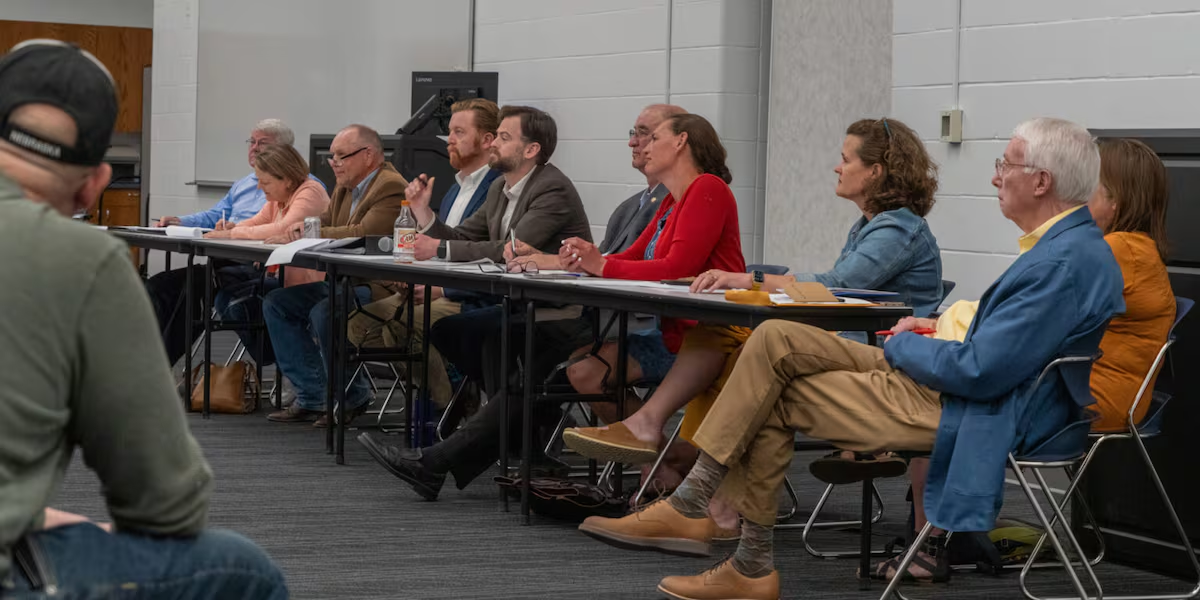
– Local officials and community groups will likely engage in public hearings and zoning meetings as applications move through the review process.
What consumers can expect – A limited number of retail storefronts at launch. Consumers in population centers are likely to see stores open first, while rural areas may wait or rely on delivery and out-of-area shopping until more outlets appear.
– Product variety and pricing will depend on how vendors source products, state-imposed product rules, tax rates and local market competition.
Bottom line Virginia’s legislature capped the number of retail cannabis shops at 350 and set a clear starting point for licensing: applications will be accepted beginning next February. The cap creates a competitive application environment, concentrates potential openings where demand and zoning allow, and sets a defined timetable for regulators, applicants and local governments to implement retail cannabis sales. Companies planning to enter the market should prepare licensing materials now and coordinate with local authorities on zoning and permitting requirements.