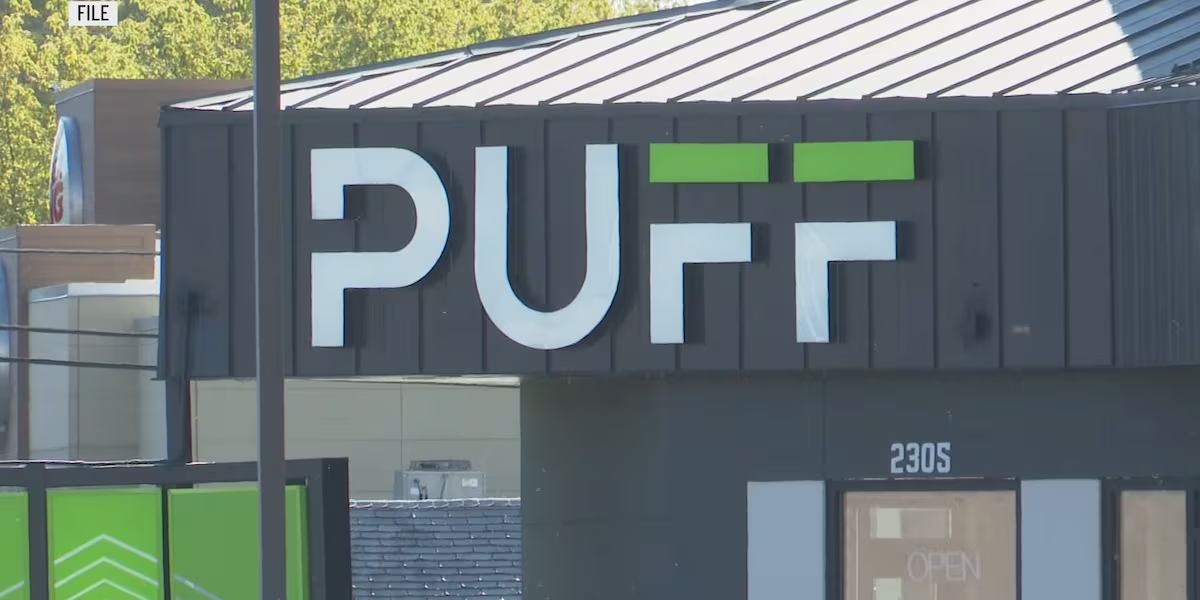

Commercial cannabis moved forward in Chico and Sacramento this month as two city councils approved pilot programs that expand legal growing and on-site use. Chico’s council approved rules to allow commercial cultivation inside city limits, and Sacramento finalized a pilot permitting cannabis consumption lounges.
Chico approves commercial cultivation
On June 16, the Chico City Council voted 4-3 to permit commercial cannabis cultivation in designated industrial zones. The vote follows an April 2026 5-2 directive that asked staff to study how to amend the Chico Municipal Code to allow growers. The council majority—Katie Hawley, Councilmember Goldstein, Addison Winslow and Mayor Reynolds—approved the Principal Planner’s recommendations identifying small indoor sites and some mixed or outdoor options that fit existing commercial and industrial zoning.
Chico currently allows commercial distribution, manufacturing, testing laboratories, retail storefronts and delivery-only operations. The newly approved changes will add licensed cultivation as an allowed commercial use in specified industrial neighborhoods, subject to zoning, odor controls and permitting.
City staff recommended focusing on sites small enough to fit in industrial parks and on indoor cultivation where odor and neighborhood impacts are easier to control. Councilmember Winslow said he expected outdoor grows to be limited. Former police chief and Councilmember Mike O’Brien opposed the measure, citing U.S. Drug Enforcement Administration data he said links illegal markets in Butte County to violence and other crime. Supporters including Councilmember Hawley and Councilmember Goldstein argued that legal, regulated operations can redirect revenue from illegal sellers into local businesses and tax rolls.
Micro-business debate
Public comment at the June 16 hearing raised the issue of cannabis micro-businesses. A Type 12 micro-business license at the state level allows a single operator to combine up to three activities—cultivation, manufacturing, distribution or retail—into one license. Proponents argue micro-businesses reduce duplicate fees and compliance steps for small operators. Charles Burton of Chico’s Best described the current chain as five separate licensed steps: grower, manufacturer, testing, distributor, dispensary.
Planner Garrett Norman said micro-businesses are a state-authorized carve-out that can reduce administrative costs but come with limitations. Councilmember Katie Hawley was advised to bring micro-business policy back as a separate agenda item for future consideration.
Not all local retailers support vertical integration. Tim Dodd, co-founder and CEO of Sweet Flower dispensary, warned that micro-businesses can create unfair competition for stand-alone dispensaries and small craft growers. He said Chico’s three local retailers currently compete well, hire locally and contribute to the community.
Sacramento green-lights consumption lounge pilot amid fee dispute
On June 23, the Sacramento City Council passed final regulations to launch a pilot program allowing on-site cannabis consumption lounges attached to licensed dispensaries. The framework originated in a late-2024 ordinance; staff completed the implementing regulations this month.
The vote came amid significant concern from dispensary owners over licensing fees. Several stakeholders told council members that fees published since March rose sharply after an independent contractor restructured the fee schedule. Councilmember Lisa Kaplan said the fee increases approached 40% without clear justification and called for more transparency. District 2 Councilmember Roger Dickinson pressed staff for an explanation and learned the changes came from an outside firm, Environmental Planning Services.
Operators estimated build and compliance costs in the hundreds of thousands of dollars. Mindy Galloway, owner of Pocket Dispensary, estimated $400,000 to open an on-site lounge. Crystal Nugs co-founder Maisha Bahati said ventilation alone could cost about $200,000 and that sprinkler and fire-safety upgrades would add to the total. Several speakers urged the city to lower or phase fees—one suggested reduced fees in license renewal years—to avoid pricing small operators out of the program.
Existing example in Isleton
County-level precedent exists: Delta Boyz dispensary in Isleton opened a smoking lounge in 2022. General manager Jax Eubanks said Isleton required city council approval and high-capacity exhaust ventilation but charged no additional licensing or ongoing lounge fees. Isleton reports no major safety or operational problems since opening the lounge and uses the space for social consumption for adults 21 and over.
What’s next and timelines
Sacramento’s pilot sets a path for dispensaries to apply for Type 2 licenses and conditional-use permits. Crystal Nugs says it will apply for a Type 2 license and wait for the Planning Department to open applications; Bahati estimates the Conditional Use Permit process could take about six months, based on past experience. Operators should budget for ventilation systems in the $200,000 range, plus sprinkler and safety upgrades that can push total buildout toward $400,000.
Chico will return to council with specific municipal code amendments and zoning maps spelling out where cultivation can occur. Officials and industry stakeholders will continue to debate whether to include micro-business provisions and how to balance licensing costs across growers, manufacturers and retailers.
Financial impacts and public safety considerations
Both measures reflect a trade-off between opening legal market access and imposing regulatory costs. In Sacramento, stakeholders quantify those costs: some fee lines rose by roughly 40% compared with earlier estimates, and buildouts for lounges can cost between $200,000 and $400,000. In Chico, staff aim to limit cultivation to specific industrial parcels to control odor and neighborhood impacts; opponents warn that any legal expansion can be exploited by illegal networks unless enforcement and licensing are robust.
Local officials said the pilots will produce data over the next 12 months—application counts, compliance incidents, tax revenue and neighborhood impacts—that will inform permanent policy. Stakeholders on both sides asked councils to track permit timelines, fee schedules and measured financial outcomes so future rules can be adjusted to support legal businesses while minimizing public-safety risks.
Bottom line
Chico’s 4-3 vote opens municipal zoning to licensed commercial cultivation in selected industrial areas; Sacramento’s final rules launch a consumption lounge pilot but face pushback over a roughly 40% increase in fees and six-figure build costs. Both cities will use pilot data and permitting outcomes to refine rules, decide on micro-business inclusion, and set long-term regulatory structures for local cannabis markets.