
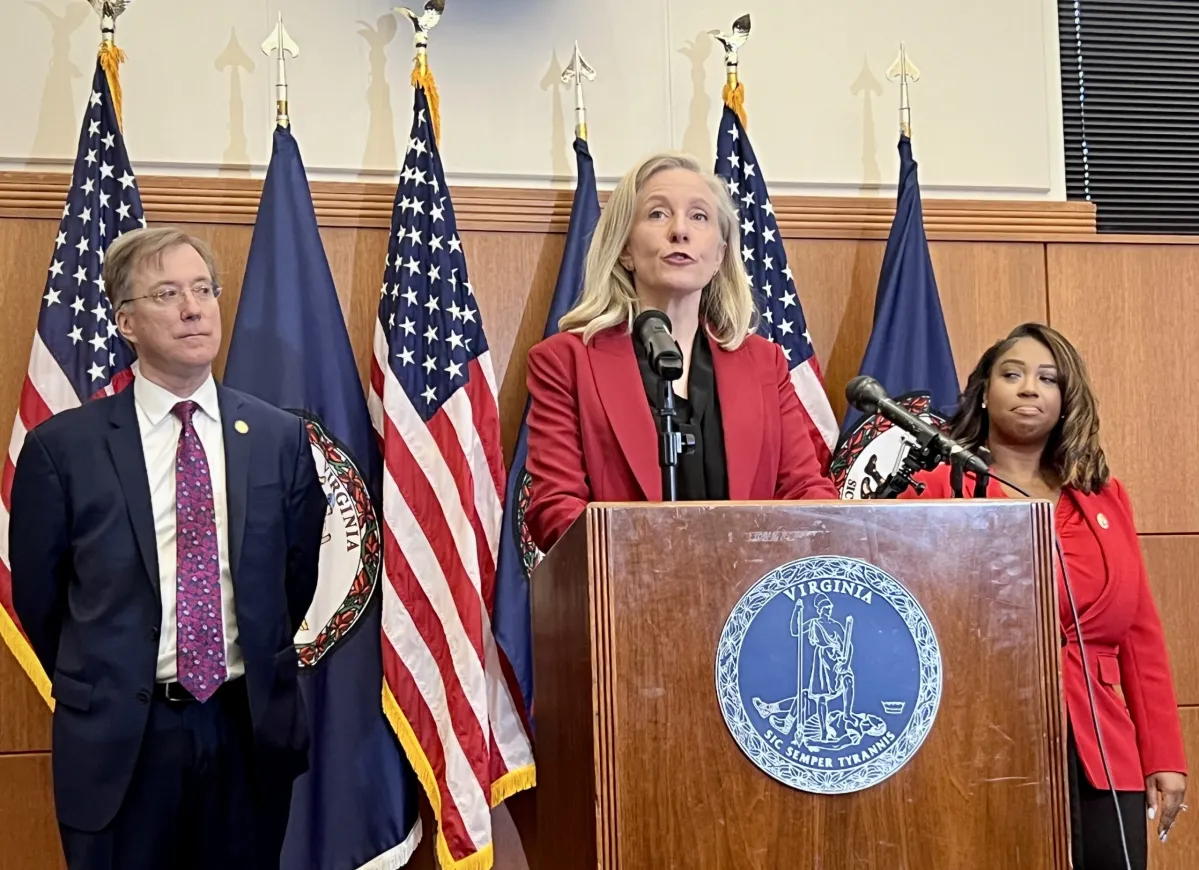
Virginia Governor Abigail Spanberger and legislative leaders announced an agreement on cannabis legalization that sets a July 2027 start date for retail sales and limits retail licenses to 350 statewide. The deal, reached after post-session negotiations, slows the license rollout compared with the measure passed by the General Assembly in 2026 and removes certain penalties the governor had sought to add.
Key dates and license limits – Retail sales begin July 1, 2027. – Total retail licenses capped at 350; issuance will be phased in over time rather than granted all at once. – The state may issue up to 100 microbusiness licenses by May 2027 to support small operators.
Taxes, fees and funding allocations – State excise tax starts at 6% at launch and increases to 8% on July 1, 2029. – Localities may levy an additional retail tax up to 3%. – In year one, 75% of license fee deposits will be directed to the Cannabis Equity Business Loan Fund to finance businesses in communities disproportionately affected by past enforcement. – Sales revenue will be allocated to: early childcare and education, K-12 education, behavioral health programs for substance use disorder prevention and treatment, public health programs, and the Cannabis Equity Reinvestment Fund.
Regulatory and public-safety measures – Possession limit will increase from one ounce to two ounces for adults. – Starting July 2027, public consumption of cannabis will carry a $250 civil penalty. – The framework includes strict testing and labeling requirements for products sold at retail and a separate measure aimed at limiting intoxicating hemp products sold in general retail settings. – Regulatory language protecting impact licensees and small businesses from predatory investment and restrictive transfers of licenses has been restored.
Equity and business support – The agreement establishes a Cannabis Impact Business Support Team to assist entrepreneurs from communities disproportionately affected by prior cannabis enforcement. – A dedicated loan fund and the phased license rollout are intended to create measurable access for smaller operators: up to 100 microbusiness licenses will be available early, and licensing will continue in later waves under the cap of 350.
What changed from earlier proposals Governor Spanberger had vetoed the bill passed during the 2026 session—sponsored by state Sen. Lashrecse Aird and Del. Paul Krizek—after the General Assembly declined several of her amendments. The current compromise delays the market opening and slows license issuance compared with the Assembly-passed bill, and it removes the tougher criminal penalties for transporting unlawfully large quantities of cannabis that the governor had included in her previous amendments.
Lawmakers plan to include the revised framework in the commonwealth’s budget to revive the vetoed bill. While the governor retains line-item veto power over the budget, Spanberger joined legislators at a Tuesday joint press conference that signaled her support for incorporating the compromise into the spending plan.
Statements from leaders Spanberger emphasized retailer compliance and protections for young people, saying it is important that retailers do not market to minors and that they comply with laws against sales to underage buyers. Sen. Lashrecse Aird described the agreement as a regulatory framework that protects youth, offers adults a legal option, and avoids criminalizing adult use. Del. Paul Krizek said the market should be open to small businesses and to communities previously harmed by enforcement actions.
Legislative context The House and Senate still have unresolved differences on the full biennial budget—primarily over tax exemptions for data centers—but conferees were set to meet to reconcile spending bills. Cannabis policy appears to be one of the areas negotiated to settlement before those budget wranglings conclude.
Ongoing oversight The Joint Commission to Oversee the Transition of the Commonwealth into a Cannabis Retail Market will continue to review implementation and make recommendations to the legislature. Lawmakers and regulators will monitor license distribution waves, microbusiness uptake, and the performance of the Cannabis Equity Business Loan Fund.
Immediate effects and next steps – Businesses seeking microbusiness licenses should prepare applications ahead of the May 2027 window. – Local governments can plan to consider up to a 3% local retail tax and must adapt zoning and permitting processes for retail outlets within the phased licensing schedule. – Regulators will draft final testing, labeling, and hemp-product rules to align with the framework before retail launch.
The agreement sets fixed, measurable rules—start date, license cap, tax schedule, and specific equity funding targets—that will guide Virginia’s transition to a regulated adult-use market while preserving oversight steps intended to protect youth and support small businesses.