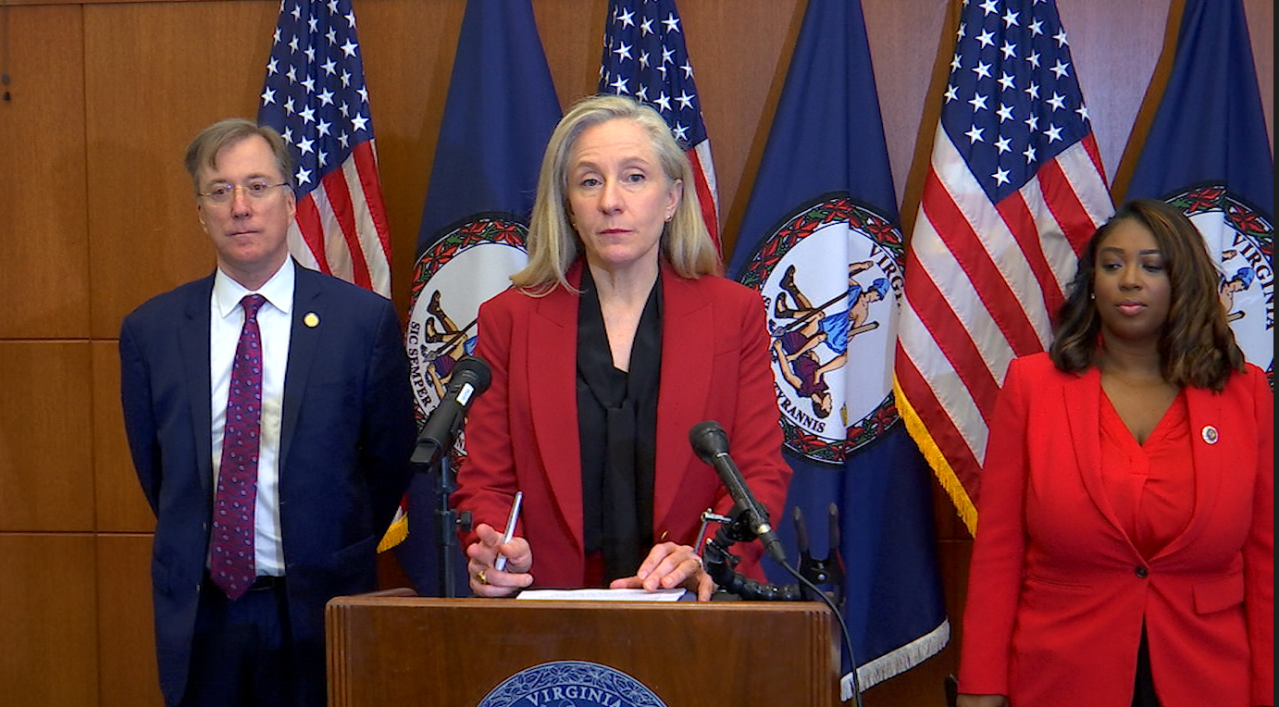
cannabis legalization in Virginia moved forward after Gov. Abigail Spanberger (D) and legislative negotiators unveiled a compromise that would allow legal retail sales beginning July 1, 2027 if lawmakers include the language in the final state budget.
Key provisions in the deal announced by Spanberger, Delegate Paul Krizek (D-Fairfax) and Senator Lashrecse Aird (D-Henrico) set a statewide cap of 350 retail licenses. State officials plan to release those licenses gradually rather than issuing all 350 at once; the rollout pace will depend on market demand and regulatory readiness.
Tax structure: The compromise levies a state excise tax of 6% on cannabis products at launch, rising to 8% on July 1, 2029. That excise tax will apply in addition to Virginia’s existing sales and use tax. Local governments may impose an additional tax of up to 3.5% on retail cannabis sales.
Spanberger framed the lower initial excise rate as a tool to encourage consumers to shift from the illicit market into regulated retail outlets. “If the taxation rate began so high that we might not have that initial conversion,” she said, “we would risk leaving the illicit market intact.” The agreement aims to reduce unregulated sales by making legal purchases more competitively priced at the outset.
Supporters say the compromise balances consumer safety and market control: a fixed ceiling on outlets, phased license releases to limit abrupt market saturation, and a tax trajectory intended to expand legal supply while preserving price incentives to move users off illicit channels. The plan does not specify the exact timeline for issuing the first tranche of licenses.
Opposition and procedural hurdles: Republican Senate Minority Leader Ryan McDougle criticized the approach, arguing he does not support a retail marijuana market and that major policy changes should not be enacted through the budget process. The compromise will take effect only if budget language that contains it survives final negotiations between the House and Senate.
As of the announcement, the two chambers have not agreed on a final budget. The impasse centers largely on disagreements over data center policy. The House canceled a planned return to Richmond on Thursday ahead of the July 1 budget deadline; the Senate remains scheduled to reconvene on June 22. If lawmakers fail to finalize a budget by July 1, the cannabis retail start date would be in jeopardy.
Regulatory and economic implications: Capping stores at 350 creates a finite retail footprint; at full deployment that equals roughly one retail outlet per 566,000 Virginians (using an estimated 2026 population of 198.9 million? — NOTE: population calculations should be based on up-to-date state estimates). Regulators and local governments will need to set licensing criteria, zoning rules and public safety standards before sales can begin.
The tax plan provides measurable revenue expectations: a 6% state excise tax at launch, increasing to 8% after two years, plus up to 3.5% in local taxes. Those rates will combine with existing sales and use tax percentages to determine final consumer prices. Spanberger and other negotiators said the tiered tax model intends to strike a balance between revenue generation and undercutting illicit sellers.
Next steps and uncertainties: The compromise must be written into the final budget bill and survive votes in both chambers. If adopted, regulators will have approximately 24 months to set licensing rules and prepare enforcement mechanisms before the projected July 1, 2027 retail start. If budget talks stall or lawmakers remove the language, the timeline will slip.
Practical effects for consumers and localities: Residents could see licensed retail outlets and regulated products by mid-2027 if the budget includes the provision and regulators execute licensing on schedule. Local governments will gain the option to levy up to 3.5% in additional taxes on retail sales, allowing municipalities to capture revenue but also to influence retail economics. Businesses seeking licenses will confront a capped, phased system rather than an open, immediate issuance of permits.
Lawmakers and the governor positioned the deal as a policy compromise designed to create a controlled market with gradual expansion, measured taxation and local taxing authority. Final implementation depends on budget negotiations now underway in Richmond, where disagreements over unrelated items could determine whether the retail rollout proceeds on the proposed timetable.