
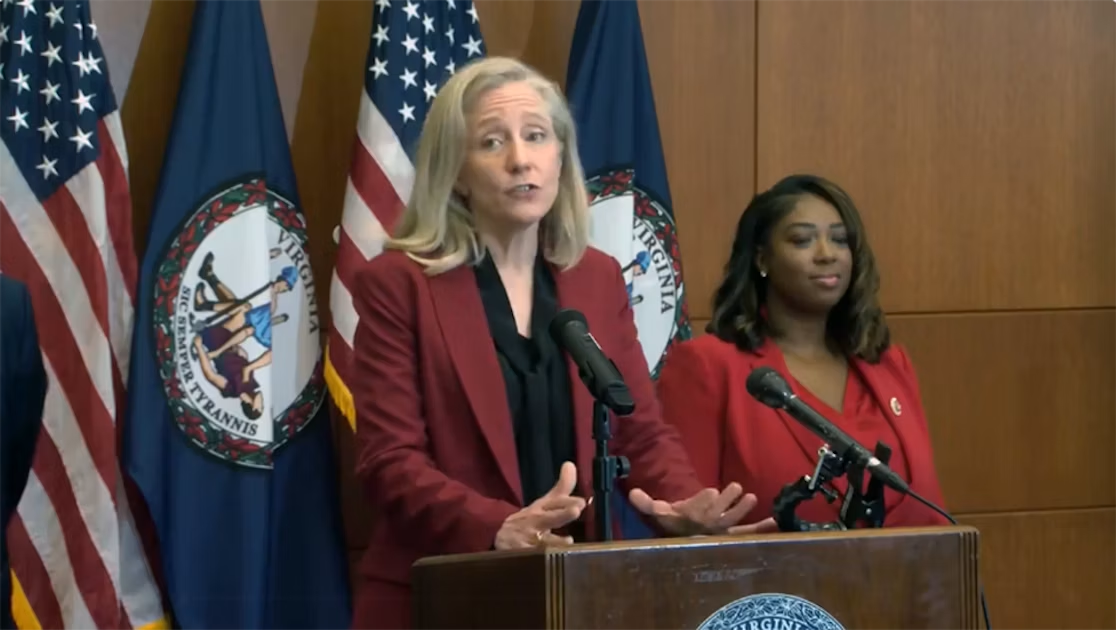
Virginia opens adult-use cannabis retail sales on July 1, 2027, after Gov. Abigail Spanberger and state lawmakers reached a budget compromise to create a licensed marketplace for adults 21 and older.
Key dates and rollout – Retail sales begin July 1, 2027. Lawmakers had sought a Jan. 1, 2027 launch; the compromise delays opening by six months. – The Virginia Cannabis Control Authority (CCA) may issue up to 100 microbusiness licenses by May 1, 2027 to expand small-operator access early in the market. – Five existing medical licensees may convert to adult-use operations immediately by paying a one-time $10 million conversion fee.
Possession, stores and local rules – The possession limit is set at 2 ounces for adults, reduced from the 2.5-ounce limit in earlier proposals. – The compromise restores a 350-dispensary cap statewide. Regulators will control the pace of license issuance based on market conditions; the cap will not be released all at once. – Local governments cannot opt out of allowing adult-use cannabis businesses in their jurisdictions under the budget language. – Dispensaries must be at least 1,000 feet from schools, hospitals, playgrounds and drug treatment centers.
Taxes and revenue allocations – The adult-use excise tax is 8% beginning July 1, 2029; the earlier proposal called for 6%. Retail sales will also carry a 5.3% state sales-and-use tax plus a local tax between 1% and 3.5%. – Spanberger removed fixed percentage earmarks in her substitute bill, but the compromise reserves excise revenue for the same programs lawmakers prioritized: a Cannabis Equity Reinvestment Fund, early childhood care and education, the Department of Behavioral Health and Developmental Services, and public health initiatives. (Aird and Krizek’s original legislation had proposed 30%, 40%, 25%, and 5% splits, respectively.)
Public safety, enforcement and penalties – The budget agreement replaces proposed criminal penalties with civil enforcement measures in key areas. Public consumption violations will carry a $250 civil fine starting in 2027. – The CCA gains authority to create escalating penalties for businesses that fail to perform required age-verification checks and to enforce sales-to-minors rules. – The compromise removes the governor’s previously proposed Class 4 and Class 1 misdemeanor penalties tied to public consumption and underage possession.
Marketing, packaging and product rules – The compromise prohibits cartoon-style advertising and bans products shaped like animals, fruits, vehicles or humans. – Child-resistant packaging is required. – The CCA will assume regulatory oversight of intoxicating hemp products (previously managed by the Virginia Department of Agriculture and Consumer Services).
Market oversight and transparency – The CCA may maintain a public licensee registry and establish an anonymous tip line to report suspected illicit activity. – The authority can investigate ownership and control interests, audit ownership and financial relationships across licensees, and set policies for ownership transparency.
Equity and access measures – The budget deal sets aside 75% of license fee deposits collected in the first year into a Cannabis Equity Business Loan Fund to address capital barriers for entrepreneurs from communities disproportionately affected by past enforcement. – The microbusiness licenses (up to 100) are intended to create low-capital entry points and prevent a market dominated by large, well-capitalized firms. – Sponsor Del. Paul Krizek emphasized the measures aim to widen economic participation for people who faced disproportionate consequences under prior prohibition policies.
Political context and next steps – Spanberger announced the compromise on June 16 with bill sponsors Sen. Lashrecse Aird and Del. Paul Krizek. The announcement follows Spanberger’s veto of an earlier adult-use bill and negotiations over amendments she sought. – Spanberger secured reductions on possession limits, a delayed start date, a higher excise tax after 2029, and regulatory authority for the CCA on penalties and oversight. Aird and Krizek regained the 350-dispensary cap and protections to prevent local opt-outs. – Regulators must now draft licensing rules, compliance standards, and timelines for rolling out licenses within the 350-cap framework. The CCA will also develop age-verification penalties, packaging rules, buffers from sensitive sites, and the public registry.
Effect on illicit market and industry participants – Sponsors say the combined measures—retailer limits tied to market conditions, a conversion path for medical operators, microbusiness licenses, and equity loan funding—are designed to create supply that competes with illicit sellers while expanding lawful business participation. – The immediate ability for five medical licensees to convert with a $10 million fee provides for some existing operators to enter the adult market quickly, while microbusiness and loan-fund provisions aim to lower barriers for smaller entrants.
What to watch – How quickly the CCA issues licenses under the 350-cap limit and how it stages rollouts across regions. – Implementation details for the Cannabis Equity Business Loan Fund, including eligibility and loan size. – The CCA’s enforcement approach for age verification and the effectiveness of civil penalties in reducing sales to minors and public consumption.
The budget compromise delivers a detailed regulatory framework and a firm start date for retail sales while embedding revenue, equity and consumer-protection mechanisms into Virginia’s adult-use market. Lawmakers and the governor expect the CCA to convert the provisions into rules and licenses ahead of the July 2027 launch.