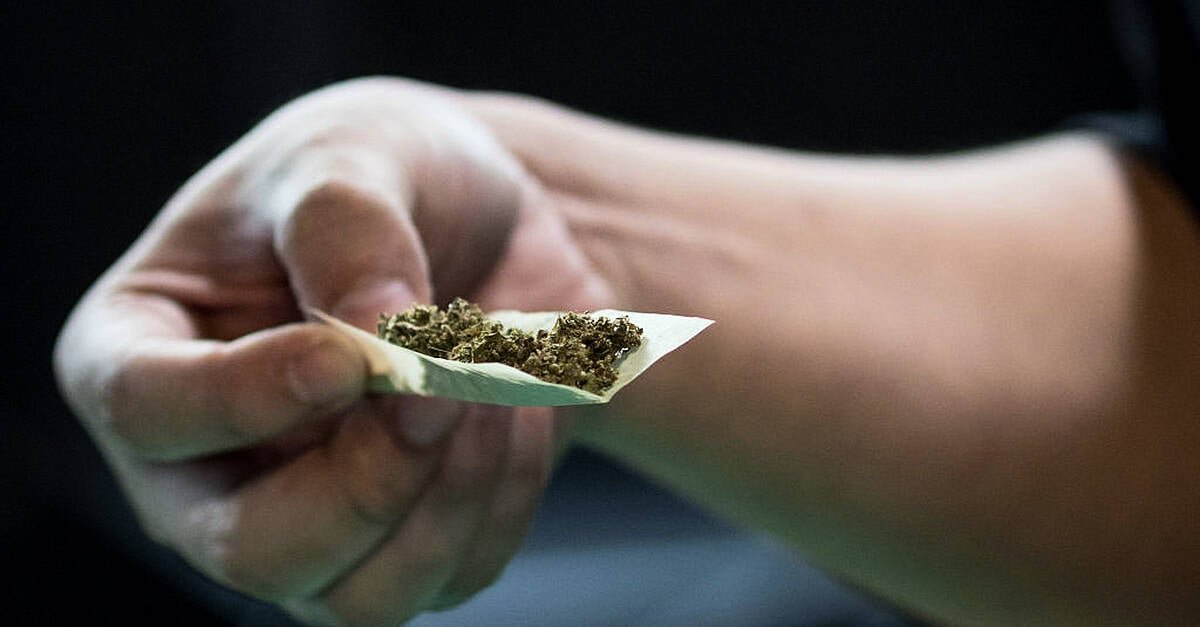

cannabis painkiller Exilby was approved by Germany’s Federal Institute for Drugs and Medical Devices (BfArM) on 9 June 2026 for chronic back pain with a neuropathic component. Vertanical, the privately owned manufacturer, says it will launch Exilby in Germany and Austria in September 2026, subject to price agreements with statutory health insurers.
Regulators cleared Exilby as a finished, standardized cannabis medicine designed to offer an alternative to opioid analgesics. Germany issues roughly 20 million opioid prescriptions a year; Vertanical’s founder Clemens Fischer positions Exilby as a non‑addictive substitute for drugs such as tramadol and fentanyl. The company reports that clinical data published in Nature Medicine showed no dependence potential for the drug’s active ingredient.
Approval relied on a phase‑3 trial that enrolled 820 participants with chronic back pain including a neuropathic element. Trial results: mean pain reduction on the study rating scale was 1.9 points for Exilby versus 1.4 points for placebo (a 0.5‑point absolute difference). In a predefined target subgroup the between‑group difference reached 1.6 points. Patients who stayed on treatment experienced sustained relief for more than 12 months. Adverse effects prompted 17% of participants to discontinue therapy.
Vertanical tested extracts from 500 different cannabis plant varieties before selecting the formulation used in Exilby. The company remains fully owned by Clemens Fischer and Madlena Hohlefelder and reports no external investors.
International regulatory progress is already under way. The US Food and Drug Administration granted Breakthrough Therapy designation to Exilby’s active ingredient on 18 May 2026. A separate US phase‑3 trial is in progress, and Vertanical expects potential US approval in 2028 or 2029 if trials and regulatory review proceed on schedule.
Market and payer issues will affect rollout. Vertanical must negotiate reimbursement rates with German statutory insurers before a September launch. At the same time, German lawmakers debated on 12 June 2026 a proposal to stop reimbursing raw cannabis flowers while keeping extracts and finished medicines covered. The government estimates cutting flower reimbursement could reduce public spending by about €130 million in 2027. Industry groups object, noting that flowers are often a lower‑cost option for some patients compared with finished products like Exilby.
Vertanical says it is exploring additional indications for Exilby, including polyneuropathy and osteoarthritis. Clinicians and researchers are also expanding pain‑therapy research in Germany: the German Society for Pain Medicine announced a study of at least 1,500 participants on chronic back and osteoarthritis pain starting in June 2026, followed by a fibromyalgia trial in September.
Other related developments in German pain care and therapeutics: from 1 July 2026, liposuction for lipoedema will become a statutory health benefit for all severity grades if conservative treatment has failed after six months. Separately, biotechnology firm XBiotech has launched a phase‑2 trial of the monoclonal antibody vilamakitug for axial spondyloarthritis.
What the data mean: regulators approved Exilby on the basis of a controlled phase‑3 trial showing modest average pain reduction compared with placebo and a larger effect in a defined subgroup. The 17% discontinuation rate reflects tolerability limits that payers and prescribers will weigh against the drug’s lack of observed dependence potential. If Exilby reaches the market at an insurer‑negotiated price that prescribers and patients accept, it may change prescribing choices for patients with chronic back pain, particularly those at risk of opioid dependence.
Key dates and figures – BfArM approval: 9 June 2026 – US FDA Breakthrough Therapy: 18 May 2026 – Phase‑3 trial size: 820 participants – Pain reduction: 1.9 points (Exilby) vs 1.4 points (placebo); subgroup difference 1.6 points – Discontinuations for adverse effects: 17% – Launch planned: September 2026 (Germany and Austria), subject to price talks – Estimated savings from cutting flower reimbursement: ~€130 million in 2027 – Ongoing US approval window: 2028–2029
Clinicians, insurers and patient groups will monitor head‑to‑head data versus opioids and cost comparisons with raw‑flower therapy as Exilby moves toward market access. Vertanical and German health authorities will face concrete decisions on pricing, reimbursement and clinical guidance once launch and further trial results occur.