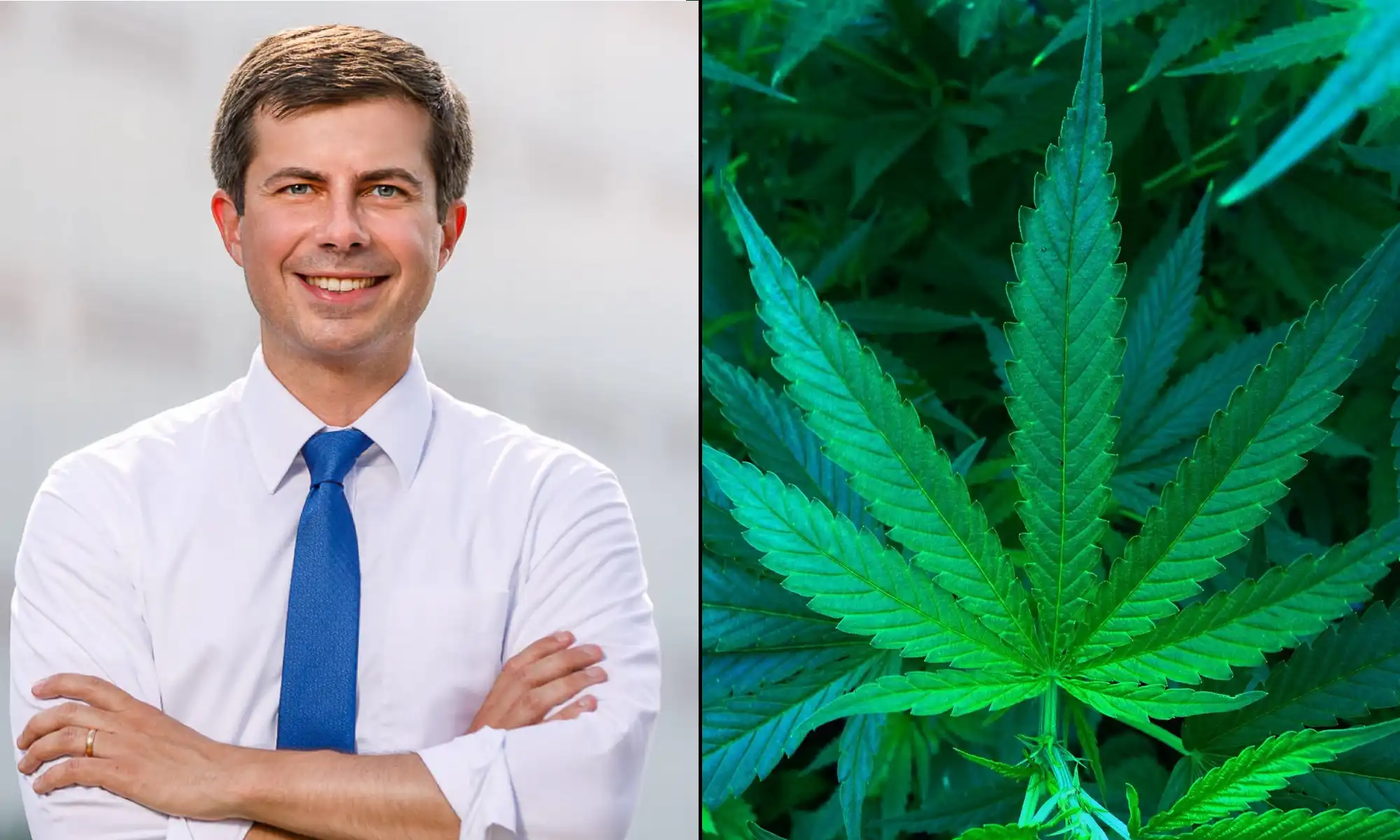
medical cannabis has “made a difference” for people close to Pete Buttigieg, the former transportation secretary and 2020 presidential candidate said during a recent trip to Nebraska. Buttigieg, who served in the U.S. Navy Reserve, said the drug has helped veterans he served with and members of his extended family and urged officials to respect voter-approved measures expanding access.
Buttigieg spoke in Nebraska last week while campaigning with Democratic congressional candidate Denise Powell. The visit occurred as state officials move to implement ballot initiatives voters approved in 2024 to legalize medical cannabis and establish a regulatory system for patient access and businesses.
State-level implementation has encountered legal and political pushback. Nebraska Attorney General Mike Hilgers (R) has argued the cannabis measure should not have reached the ballot because of alleged defects in the petitioning process. Meanwhile, regulators and Governor Jim Pillen (R) have endorsed rules that advocates say narrow patient rights compared with what voters approved.
“It is heartbreaking to watch Pillen, to watch AG Hilgers and to watch the legislature try to strip away access to something that the vast majority of voters in this state have said that they want,” Powell said at the event alongside Buttigieg.
Buttigieg endorsed marijuana legalization and broad drug decriminalization during his 2020 campaign. His 2019 policy document on racial justice proposed federal actions: legalize marijuana, expunge past convictions, eliminate incarceration for drug possession, and reduce sentences for other drug offenses with retroactive application. The document also said Buttigieg would pursue decriminalizing all drug possession in a first term.
During his 2019 campaign appearances, Buttigieg visited a Las Vegas dispensary and told reporters that Department of Veterans Affairs doctors should be allowed to recommend medical cannabis to veterans. He also said legitimate medical use of cannabis should be covered by health insurance.
As transportation secretary under President Joe Biden, Buttigieg addressed federal drug scheduling and safety concerns. In 2024 testimony to a congressional committee, he said moving cannabis to Schedule III of the Controlled Substances Act would not change the Department of Transportation’s drug-testing rules for commercial drivers, noting DOT explicitly lists marijuana as a substance to screen for.
Advocates in Nebraska say the dispute over implementation matters for patient access. The 2024 initiatives aimed to create a regulated market for medical cannabis, set patient protections, and authorize licensed businesses to produce and dispense cannabis to qualified patients. Opponents have challenged the ballot process and regulators have issued rules that, according to supporters, narrow qualifying conditions and limit patient protections.
Buttigieg framed his remarks in personal and service-related terms. He said veterans he served with have experienced measurable improvements in symptoms from medical cannabis use, and that his extended family members likewise found the therapy useful. He urged “common sense” policy that preserves access for patients while the state resolves legal questions.
The Nebraska fight illustrates the practical gap between voter-approved initiatives and state-level implementation. When voters approve ballot measures, agencies and governors still write and sign rules that control how programs operate. That can change eligibility criteria, dispensary licensing procedures, or product restrictions—factors that affect how many patients receive care and how quickly businesses can open.
Policy experts and advocates note several concrete consequences when implementation changes scope: fewer qualifying patients, longer wait times for licensing, narrower lists of eligible conditions, and altered market economics that affect pricing and availability. Nebraska advocates have argued the recently approved rules will reduce patient access compared with the ballot language voters passed in 2024.
Buttigieg’s public support adds a national political voice to a state-level dispute. His positions on legalization and decriminalization have been consistent since 2019, encompassing criminal justice reform and federal policy shifts such as rescheduling cannabis. He has also tied medical access to veterans’ care and health insurance coverage in prior statements.
Reporting on Buttigieg’s statements and the Nebraska rollout appeared in Marijuana Moment. Tom Angell, editor of Marijuana Moment, has covered cannabis policy and politics for more than two decades.
As Nebraska officials continue implementing the 2024 measures, the dispute will likely proceed through administrative channels and legal challenges. That process will determine how many patients gain access, which conditions qualify for treatment, and how quickly licensed dispensaries can serve those patients.