
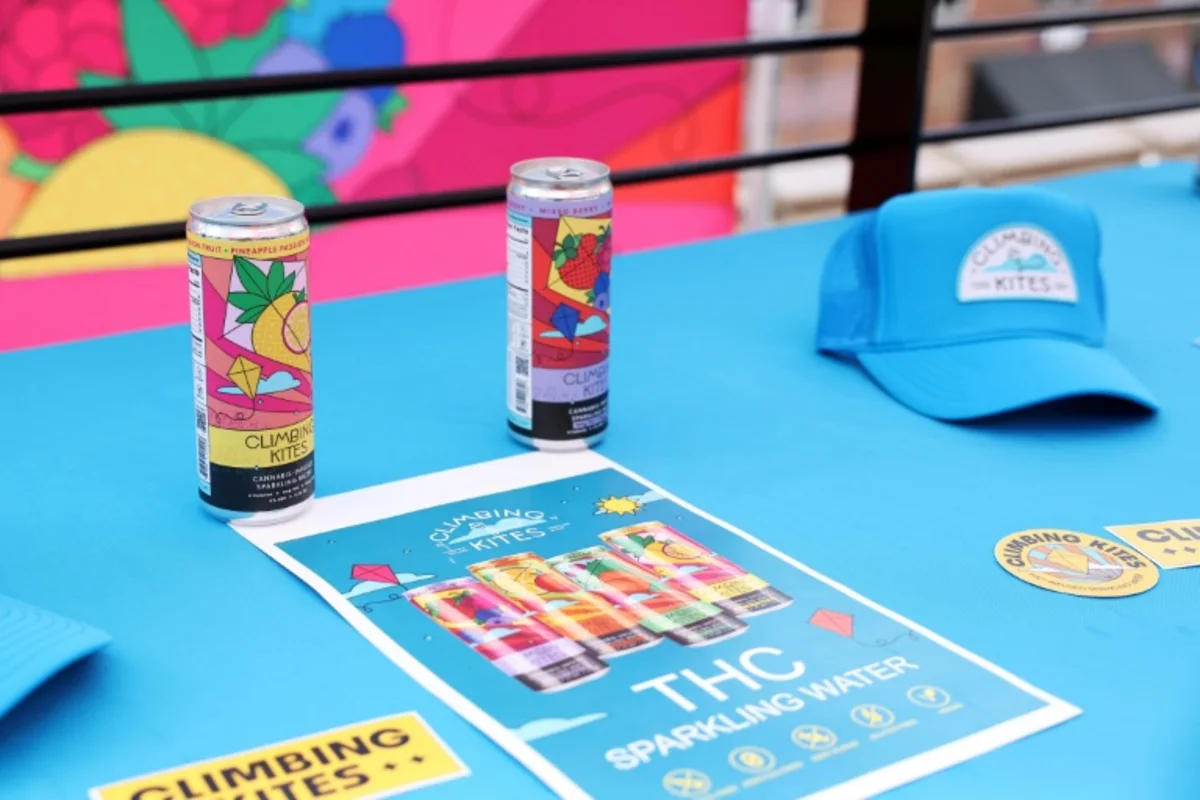
cannabis beverages have moved from specialty shops to mainstream supermarket aisles, changing how some Americans choose to relax and socialize. Sales climbed as retailers added THC-infused drinks to shelves, and market research projects rapid growth: Euromonitor estimates retail sales rose from $238 million in 2023 to about $720 million in 2025 and projects more than $1 billion in 2026 if federal rules do not change.
The new product category includes sparkling tonics, ready-to-drink cocktails and bottled social tonics labeled by milligrams of THC. One example is Willie’s Remedy+, a frosted glass bottle sold in a coastal North Carolina supermarket that lists 170 mg of THC per bottle and 10 mg per serving. Consumers pour servings into glasses; they report using them in place of beer or wine at dinners and weekend gatherings.
Cecilia Pfaff, a small business owner who hosted a July brunch, placed a bottle of Willie’s Remedy+ on the counter next to beer, wine and mimosas. Her guests, she said, were professionals who now routinely consume THC products in social settings. Pat Clougherty, a pharmaceutical salesman at the same brunch, told AFP that he and his wife have replaced evening wine or beer with THC beverages because “you don’t wake up feeling it as much,” referring to hangover effects.
Entrepreneurs and former alcohol producers are entering the market. Trent Mooring launched Kaya, a THC beverage brand in Kinston in 2024 after operating craft beer and alcoholic seltzer lines. He reported that Kaya’s sales tripled within a year after a major supermarket chain agreed to carry the products. Mooring attributed the jump directly to broader shelf availability: once a national or regional chain lists a product, weekly unit sales and distribution points rise quickly.
Gallup polling shows a shift in alcohol consumption that parallels the cannabis beverage trend. In 2025, Gallup found 54 percent of Americans reported drinking alcohol, the lowest share since the organization began asking the question in 1939. Analysts link that decline to changing preferences among younger adults and to alternative options such as THC drinks and nonalcoholic beverages.
Euromonitor’s projection of $720 million in 2025 sales reflects two main drivers: product migration from niche dispensaries into mainstream retail, and higher per-unit THC concentrations that encourage repeat purchases. Retailers report that customers buy multi-serve bottles and single-serve cans; pricing varies by state and by retailer, but premium craft-style THC drinks often sell for prices comparable to premium beers or seltzers.
Retail placement affects consumer behavior. Stores that stock THC beverages report increased basket size for buyers who purchase mixers, snacks and nonalcoholic drinks alongside THC products. Producers say shelf presence also reduces search friction for buyers who previously had to visit licensed cannabis dispensaries.
The market faces regulatory uncertainty. Federal lawmakers are considering legislation that could restrict or clarify the sale of hemp-derived THC products. Industry sources and analysts warn that a change in federal enforcement or a new law could force retailers and producers to pull certain THC-infused beverages from mainstream shelves or to reformulate products to comply with new limits.
Companies and investors are already pricing that risk into plans. Some producers are diversifying product lines into low-THC or CBD-only drinks to preserve retail relationships if federal rules tighten. Others are building direct-to-consumer channels in states with more permissive laws.
Public health and safety advocates have pointed to packaging and labeling as potential issues. Products labeled with milligrams of THC per serving aim to help consumers dose, but grocery-style packaging and premium branding can blur distinctions between alcoholic beverages and cannabis drinks. State regulators vary on labeling requirements, and calls for standardized labeling and child-resistant packaging have grown louder as THC beverages reach supermarket shelves.
For now, consumer behavior provides concrete signals: supermarket listings increase sales; consumers report substituting THC drinks for alcohol to avoid hangovers; and some startups report rapid revenue growth after landing retail distribution. Euromonitor’s forecast — from $238 million in 2023 to roughly $720 million in 2025 and above $1 billion in 2026 — quantifies that shift but also assumes the regulatory environment remains stable.
Retailers, producers and consumers are watching federal and state policy closely. If lawmakers tighten rules on hemp-derived THC or change enforcement priorities, shelf assortments and sales volumes could fall rapidly. If policy remains unchanged, the category could continue expanding as mainstream retail channels broaden distribution and consumers trade alcoholic beverages for THC-infused alternatives.
Key measurable points: – Euromonitor projects retail cannabis beverage sales: $238M (2023) → ~$720M (2025) → >$1B (2026) under current policy. – Gallup reports 54% of Americans drank alcohol in 2025, the lowest rate since 1939. – Example product: Willie’s Remedy+ bottle lists 170 mg THC total; 10 mg per serving. – Producers report tripled sales after supermarket listings.
Those figures show how distribution and labeling affect consumption and revenue. The coming months of legislative debate will determine whether the market sustains its current growth trajectory or contracts under new federal rules.