
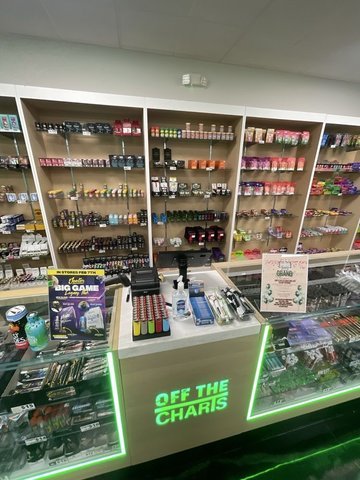
Manteca cannabis sales have generated $760,749.81 in the first 16 months since the city allowed storefront dispensaries. The City Council approved an ordinance permitting up to three retail cannabis outlets; to date, only one active storefront operates in Manteca.
Off the Charts, located on West Yosemite Avenue near the municipal wastewater treatment plant, sold the first legal cannabis product in Manteca in February 2025. A second retailer, Nectar, opened four months later behind Valley Oak Dental on West Yosemite Avenue but closed before the end of 2025. A third vendor, Embarc, received a permit for a location behind Dairy Queen on South Main Street but that deal collapsed. Embarc, which operates a location in Tracy, continues to search for a site that meets the city’s distance and zoning rules; if it finds one, the City Council must approve the site before the business can open.
The municipal ordinance sets a maximum of three storefront dispensaries but does not obligate the city to reissue a permit if a permit-holder withdraws or fails to open. That means Manteca can have one, two, three or no active storefronts depending on market and permit activity.
City finance staff report steady monthly growth in cannabis-related revenue even with a single operating dispensary. City projections used during negotiations on community benefit agreements estimated that three dispensaries could generate roughly $10 million in gross annual sales, which the city calculated would translate to about $2 million in annual net payments under minimum terms. That projection equates to roughly $667,000 per dispensary on average.
Using current actuals, the $760,749.81 collected over 16 months represents approximately 0.87% of Manteca’s $87 million general fund. City Manager Toni Lundgren said that revenue has helped cover a shortfall created by the relocation of BF Funstein Flooring and has allowed the city to avoid cutting services tied to existing budgets.
The current fiscal-year budget, which began this week, includes projections that assume continued sales growth. If those projections hold, community benefit agreement revenue could function as recurring income rather than a one-time windfall. City officials have identified specific uses for that recurring revenue: covering the roughly $150,000 annual cost of an additional police officer, funding one-time projects such as sidewalk replacement, or increasing the scope of pavement upgrades across Manteca.
Key financial assumptions behind the city’s $2 million estimate include minimum payments from operators tied to gross sales. City staff used a scenario of $10 million combined annual sales across three dispensaries to reach the estimate; actual city receipts will vary with retailer performance, the number of active storefronts, and negotiated community benefit terms.
Permit and siting rules remain a limiting factor for new entrants. Manteca’s ordinance enforces distance requirements from residences, schools, youth facilities and other sensitive uses. Those rules have complicated site searches for prospective vendors such as Embarc and reduced the pool of immediately available locations. Under the current municipal rules, a permit granted to a specific location does not automatically transfer to another vendor or site if the original permit-holder withdraws.
City staff say the local market remains small but growing. With one currently operating store and previous short-term activity from a second vendor, municipal receipts have increased month to month. City leaders are monitoring actual sales to compare real revenue against the $10 million gross-sales scenario used in earlier projections.
Next steps for Manteca include continued monitoring of dispensary openings and closures, enforcement of siting rules, and potential council action if applicants secure compliant sites. Any new store would require City Council approval for its location and for final permit issuance.
For residents and policymakers, the financial takeaway is concrete: legal storefront cannabis has produced measurable revenue for the city in a short period, and city staff are planning to allocate future receipts to public safety staffing and infrastructure projects if sales continue to grow.