
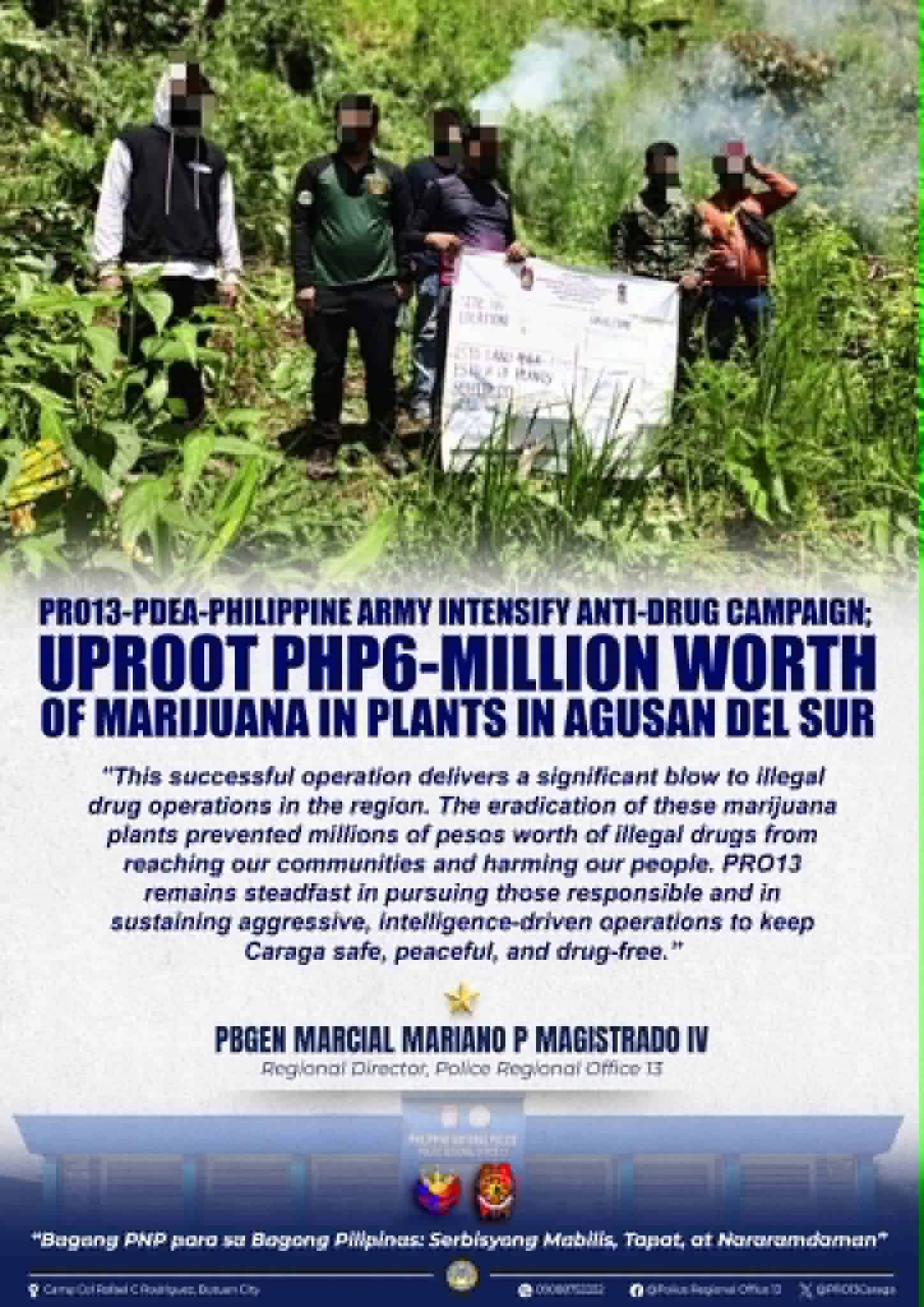
Authorities uprooted 23,431 cannabis plants with an estimated street value of P6 million during an operation in Barangay Kasapa 1, Loreto, Agusan del Sur on July 4. The plantation covered about 16,000 square meters and lay roughly 207 kilometers from the Loreto Municipal Police Station.
Police Regional Office in Caraga (PRO-13), the Philippine Drug Enforcement Agency (PDEA), and Philippine Army units conducted the raid. Participating teams included personnel from the Loreto Municipal Police Station, the Agusan del Sur Provincial Intelligence Unit, the PDEA-Agusan del Sur Provincial Office, the 2nd Agusan del Sur Provincial Mobile Force Company, and Alpha Company of the Army’s 60th Infantry Battalion.
Investigators said operatives collected representative samples of the plants for laboratory testing. The remaining plants were burned at the site under police supervision in the presence of a barangay kagawad and a member of the media to follow standard operating procedures.
No arrests occurred during the operation, but authorities said they have identified an alleged cultivator and have launched follow-up operations to locate and apprehend the suspect. Police urged residents to report suspicious activity and said public tips contributed to locating the remote plantation.
Brig. Gen. Marcial Mariano Magistrado IV, PRO-13 director, said the removal of the plantation prevented millions of pesos worth of cannabis from reaching local markets. He said PRO-13 will continue raids and follow-up missions based on intelligence and coordination with PDEA, the military, and other law enforcement units.
The July 4 eradication is one of several recent seizures in the Caraga region. Local authorities previously destroyed about 11,000 cannabis plants in a separate Agusan del Sur operation and uncovered smaller plantations in nearby provinces, underscoring an ongoing pattern of cultivation in remote, mountainous barangays.
Officials provided the following measurable details: 23,431 fully grown plants uprooted; 16,000 square meters of plantation area; estimated street value P6,000,000; operation date July 4; distance 207 kilometers from municipal police station. These figures will appear in case files and laboratory reports as investigators complete drug testing and compile evidence for prosecution.
Authorities described the eradication as an enforcement action to interrupt supply lines. They said joint operations combine field intelligence, aerial or ground reconnaissance where available, and patrol resources to identify and dismantle outdoor cannabis sites that use hard-to-reach terrain to avoid detection.
Local leaders who witnessed the burn confirmed police accounted for seized plant samples and followed protocols for disposal. Media presence during the destruction aimed to document the procedure and confirm chain-of-custody steps ahead of laboratory analysis and potential criminal cases.
Police noted challenges in policing remote cultivation: difficult terrain, long distances to municipal stations, and limited access for immediate arrest. They said these factors make follow-up operations and coordinated logistics—transport, surveillance, and manpower—necessary to pursue suspects after sites are secured.
The operation’s immediate outcomes are destruction of the crop and collection of samples; next steps include lab testing to establish contraband status, tracking supply links, and filing charges once investigators confirm chain-of-evidence and identify responsible parties.
Residents in the area were asked to report unusual planting activity or strangers transporting large loads of plant material. Authorities reiterated that cooperation from local communities speeds investigations and increases the chance of arresting those running illegal plantations.