
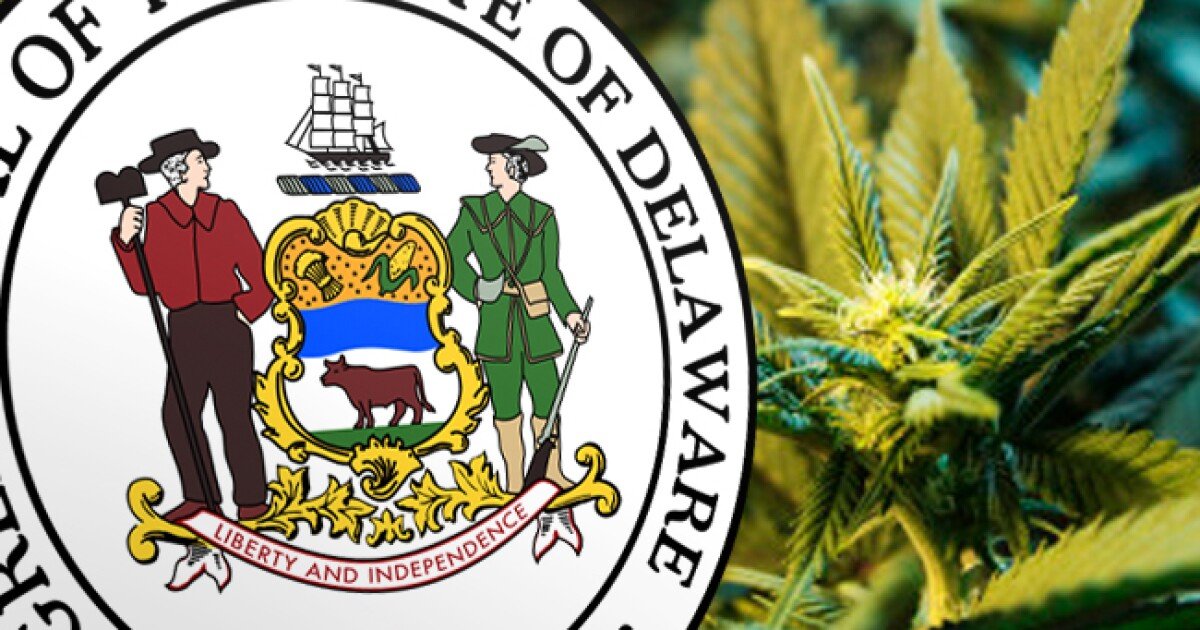
cannabis zoning will change in Delaware after the General Assembly overrode Gov. Matt Meyer’s veto on SB 75, removing wide local buffers and imposing narrower distance limits for retail stores. The House voted to override in the early hours of July 1, following a Senate override in January, making SB 75 state law.
SB 75 replaces permissive local bans based on three-mile buffers with specific, shorter distances. Under prior local ordinances, some counties allowed three-mile separations between cannabis businesses and churches, schools, colleges, and substance use treatment centers. Three miles equals 15,840 feet. The new law restricts counties to prohibiting retail cannabis stores only when a proposed location is within half a mile (0.5 mile, 2,640 feet) of another retail cannabis store, or within 500 feet of schools, licensed child-care facilities, residential treatment facilities, parks, or libraries. That cuts the previous maximum buffer distance by about 83 percent from 3 miles to 0.5 mile.
Lawmakers said the change aims to remove zoning obstacles that have slowed the rollout of recreational cannabis businesses since legalization in 2023. State Rep. Ed Osienski, the bill’s House sponsor and the House majority whip, said the legislature waited for a related court decision before proceeding with the override. A separate case—brought by Sussex County and Fenwick Island—challenged a law requiring county approval of electrical substations that meet state standards. Delaware’s higher courts and the Court of Chancery issued rulings in April that Osienski described as clarifying the legislature’s authority to set statewide siting rules, allowing the cannabis zoning override to proceed.
The House took up the veto override around 3:15 a.m. on July 1 as the 153rd legislative session concluded. Republican State Rep. Shannon Morris objected to the timing, calling the vote ‘un-transparent’ and asking why the measure was considered while many residents and lawmakers were not actively engaged. Osienski responded that the legislature had to act before the session formally ended; otherwise the measure could not be reconsidered during that session.
Sen. Trey Paradee, co-sponsor of SB 75 and co-chair of the Joint Finance Committee, joined Osienski in sponsoring the measure. The Senate had overridden Gov. Meyer’s veto in January; the House override completed the process and enacted the bill into law.
A second bill that passed this month, HB 271, narrows the application of the new distance rules. HB 271 states explicitly that the state-mandated distance limits apply only to retail cannabis businesses, not to production, processing, or wholesale operations. That means cultivation centers, manufacturers, and distributors remain subject to local zoning and other state regulations distinct from the retail rules.
Practical effects for counties and towns are concrete and immediate. Municipalities that maintain ordinances containing longer buffer distances or blanket bans tied to churches, colleges, or treatment facilities will need to amend zoning codes to comply. For example, a county that automatically prohibited retail stores within three miles of any school must either rescind that rule or modify it to align with the new 0.5-mile and 500-foot limits. Local planning departments and zoning boards will need to update maps and permit review checklists to reflect the new state standards.
SB 75 does not eliminate all local control. Counties may still deny licenses and set local conditions, but they cannot impose distance-based bans beyond the new thresholds. The law also preserves the ability to maintain other zoning standards—such as setback rules, parking requirements, signage restrictions, and hours of operation—so long as those standards do not reintroduce a de facto retail ban via excessive distance requirements.
Industry stakeholders and prospective operators said the change could accelerate store openings where local ordinances had prevented licenses. Regulators and local officials will determine timing for ordinance revisions, permit reviews, and application cycles. HB 271’s clarification that production and wholesale sites remain under separate rules could affect where firms locate cultivation and processing operations versus retail storefronts.
Key dates and figures: – Recreational cannabis legalized in Delaware in 2023. – SB 75 became state law after Senate override in January and House override on July 1, 2026. – Previous local buffers: up to 3 miles (15,840 feet). – New state limits: 0.5 mile (2,640 feet) between retail stores; 500 feet from schools, licensed child-care facilities, residential treatment facilities, parks, and libraries. – HB 271 clarifies distance limits apply to retail businesses only.
Local governments now face a defined deadline to reconcile ordinances with state law. Counties that do not adjust their zoning may face legal challenges or be required to process retail license applications that would have been barred under older, longer-distance buffers. Applicants and planners should consult updated state guidance and legal counsel to ensure compliance with SB 75 and HB 271 as they revise maps, applications, and public notices.
By replacing large, variable buffers with fixed distances, Delaware’s legislature narrowed where localities can use distance to restrict retail cannabis operations and directed local governments to revise zoning accordingly. The law aims to increase the number of locations eligible for retail licenses while keeping specific 500-foot protections near schools and certain child-focused and treatment facilities.