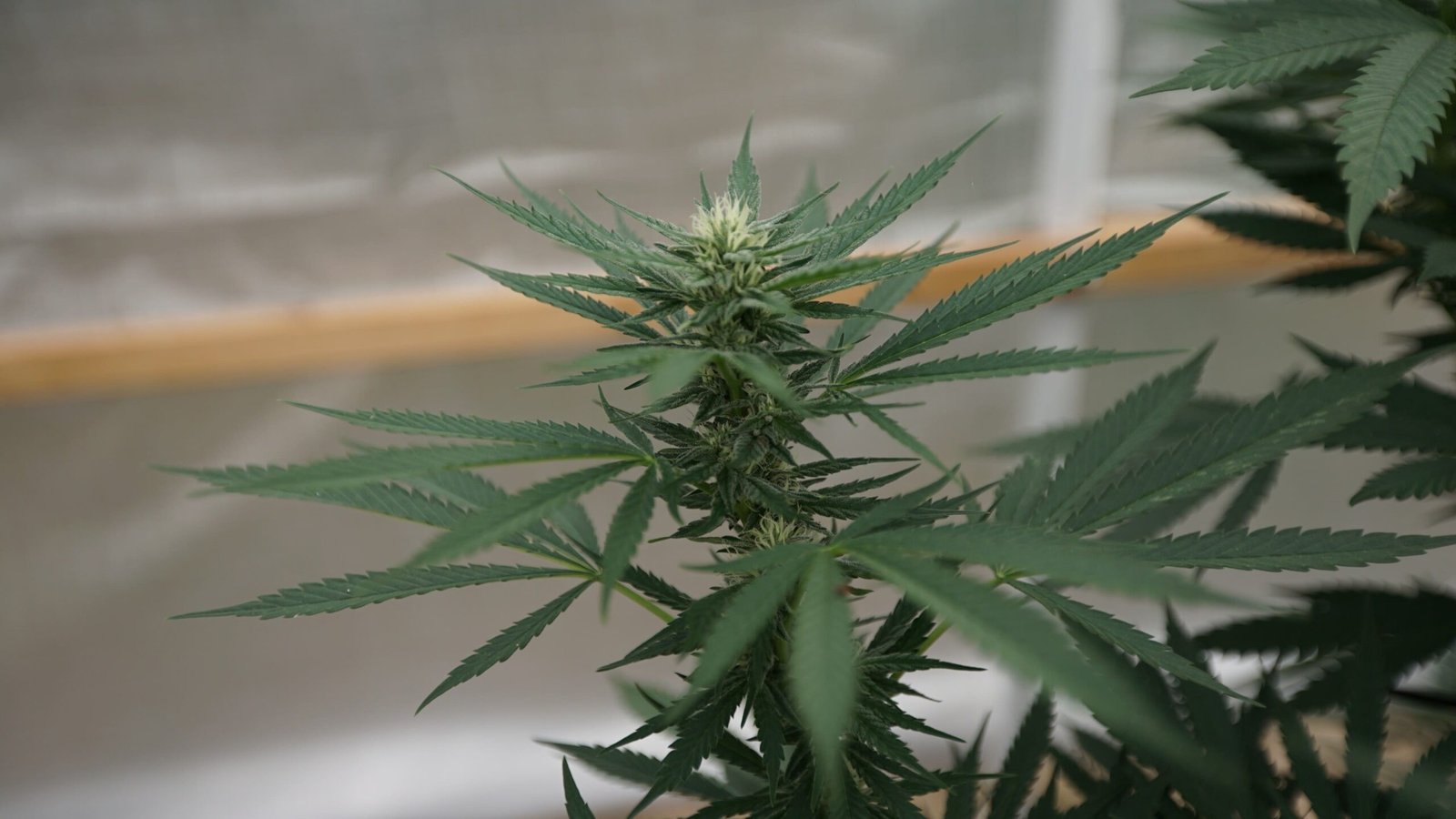
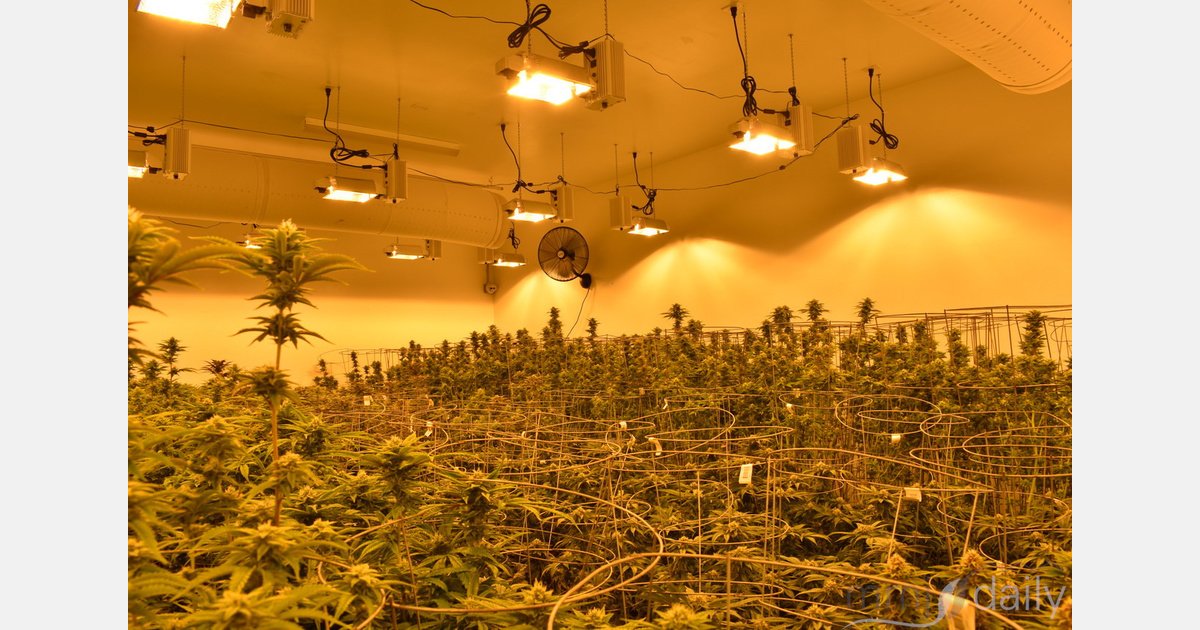
medical cannabis batches sold through German pharmacies sometimes carry certificates of analysis (COAs) that list Portugal as the manufacturing site even when pharmacists know the flower was grown in Thailand. Pharmacists report no patient complaints to date, but the mismatch between stated origin and actual cultivation has prompted closer checks and fresh demands for complete EU‑GMP documentation.
EU‑GMP (Good Manufacturing Practice) certification is mandatory for any product a German pharmacy dispenses. That certification attaches to the site recorded as the manufacturer on the COA, not to the field or greenhouse where the plants were cultivated. A crop grown outside the certified chain can pass through an EU‑GMP facility that processes, packages or tests the flower; the COA can then show the EU‑GMP site as the place of manufacture. That practice—often called “GMP washing”—meets paperwork requirements while obscuring where the crop originated.
Two different pharmacy approaches illustrate how the market is responding. One pharmacy performs no independent origin verification at intake. Staff screen suppliers when ordering: they avoid importers known for poor practices and prefer those they consider transparent. If a COA lists Portugal, this pharmacy sometimes rejects the lot because of past uncertainty; in other cases they accept it because they trust the supplier and the product consistently tests well in-house and patients report no issues.
A second pharmacy takes a stricter stance: it tests every incoming batch before sale. That outlet uses spectroscopy and other assays to verify cannabinoid levels and to detect contaminants. Management says they must test locally so they can prove any transport or storage problem occurred after receipt. The pharmacist noted past incidents that made routine testing mandatory: “In our market, we can’t sell anything without EU‑GMP certification. Everything is tested. We test with spectroscopy before giving it to clients,” they said.
Pharmacies that accept COAs without verifying cultivation steps point to supply limitations and patient demand. Cannabis can represent only a fraction of a pharmacy’s revenue—examples cited range from 0.5% to 10% of total sales—so managers evaluate risk against that share. But compliance risk does not scale with revenue: a finding tied to the cannabis line can affect the pharmacy’s entire license. That regulatory exposure has led other pharmacies to drop suppliers if any documentation gap appears, rather than attempt to audit around the issue.
Producers supplying Germany report a rapid shift in pharmacy requests. Wholesalers and growers say pharmacies increasingly ask for a complete EU‑GMP chain diagram: every process step, every service provider, and copies of each GMP license. One grower supplying the German market described the change as material and immediate: after pharmacies discovered loophole products, trust eroded and requests for full traceability rose.
The demanded diagram exposes the single point GMP washing depends on: the handoff where a crop grown in one jurisdiction acquires paperwork from another. Pharmacies want to see where planting, harvest, drying, testing and final packaging occur and which legal entity holds the EU‑GMP certification for each step. Producers say that documenting each contract manufacturer, testing lab and transporter—plus their GMP credentials—adds time and cost, but is increasingly required by buyers.
Pharmacies cite three concrete concerns when origin and COA disagree: 1) unreported post-harvest treatments such as off‑book irradiation or pesticide applications; 2) selective or manipulated testing at third‑party labs; and 3) regulatory evasion through paperwork. Any one of those can trigger a recall or a compliance action that affects the pharmacy license.
Market reactions are already visible. Some pharmacies weed out suppliers whose documentation cannot prove an unbroken EU‑GMP chain. Others keep trusted suppliers but increase on‑site testing and inventory controls. For producers, the economic calculation is shifting: investors and management must assume the loophole of GMP washing may close and plan pivots accordingly. One grower compared the current moment to the U.S. market in late 2025 when retailers pulled questionable converted‑CBD products within a year of regulatory announcements; companies that failed to adapt lost market access quickly.
Regulators have not published a single coordinated action on GMP washing specifically, but enforcement logic is straightforward under German rules: pharmacies bear liability when they release product to patients, and pharmacies must be able to show compliant sourcing. As pharmacies demand full traceability documentation and as some adopt mandatory batch testing, producers who rely on moving flower through unrelated EU‑GMP sites to clear paperwork will face higher costs, contract hurdles and risk of being dropped.
For patients, immediate impact appears limited: pharmacists report stable product quality and no rise in complaints so far. For the supply chain, the change is measurable: increased document requests, routine spectroscopy checks at point of sale, and a higher rate of supplier exclusion when COAs and known cultivation locations conflict. The practical outcome is that supply chains that cannot demonstrate an unbroken EU‑GMP path are losing access to German pharmacy channels.
Policy and market observers should expect two measurable shifts over the next 12–24 months: more pharmacies requiring end‑to‑end EU‑GMP documentation and a higher share of batches tested at the pharmacy level. Producers that can show a documented EU‑GMP path for every process step will retain access; those that cannot should plan for reduced German demand and higher compliance costs elsewhere.