New York launches cannabis care center to offer clinicians classroom and clinical resources as patient cannabis use rises. The Office of Cannabis Management (OCM) on Thursday announced the Center of Excellence for Cannabis Care and Health Equity, a statewide initiative proposed by Governor Kathy Hochul in her 2026 State of the State address. The center aims to give healthcare providers consistent, evidence-based guidance as medical and adult-use cannabis access expands.
OCM described the center as a training and resource hub that will pilot educational programs with eight partner institutions: SUNY Upstate Medical University, Stony Brook Medicine, University of Rochester Medical Center, New York Institute of Technology College of Osteopathic Medicine, Albany Medical Center, CUNY School of Public Health, University at Albany College of Integrated Health Sciences, and the New York State Office of Mental Health. Those partners will run a pilot that tests delivery methods and content across medical school classrooms, residency programs, and continuing medical education tracks.
The pilot will include Grand Rounds sessions, clinical webinars built around real patient cases, and toolkits tailored to six clinical areas: pediatrics, OB-GYN, primary care, pain management, palliative care, and emergency medicine. Materials will emphasize culturally competent, patient-centered communication and are designed for use in both undergraduate and post-graduate medical training.
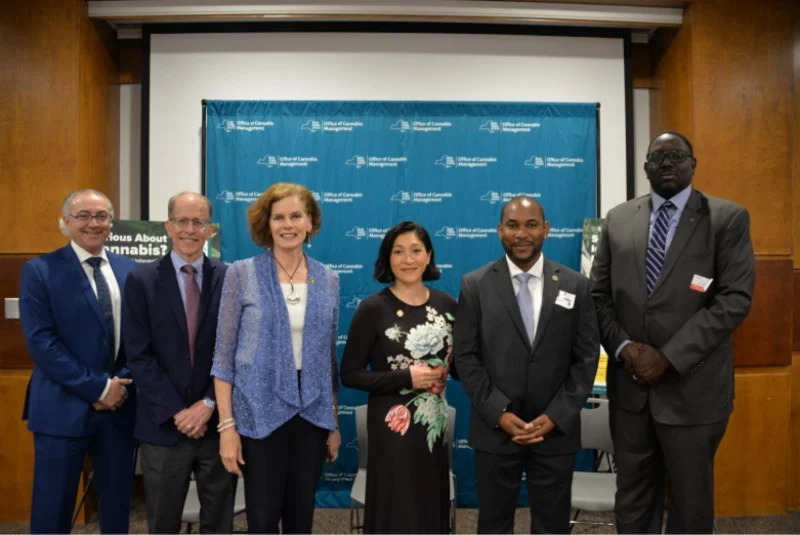
OCM Executive Director John Kagia said the center supports the agency’s public health goals by expanding access to research-based materials for providers. OCM’s chief medical officer, Dr. June Chin, framed the effort as part of a broader clinical education campaign to ensure clinicians have consistent information on dosing, drug interactions, and risk counseling.
The initiative will align with the New York State Department of Health and the Office of Addiction Services and Supports to match existing prevention guidance and addiction treatment resources. State Health Commissioner Dr. James McDonald said the center will supply clinicians with data-driven tools to discuss cannabis use, safety, and potential interactions with prescription medications.
OCM has issued a Request for Proposals (RFP) seeking vendors to build online courses on five topic areas: the endocannabinoid system; medical cannabis clinical practice; cannabis science and pharmacology; consumer health and safety; and health equity. The courses are intended for physicians, nurse practitioners, physician assistants, pharmacists, and other clinical staff. OCM said the materials will be publicly accessible to support uniform training across the state.
Concrete elements of the pilot – Institutions: 8 statewide partners will participate in pilot testing. – Clinical specialties: 6 targeted areas for specialty-specific toolkits and case-based teaching. – Training formats: Grand Rounds, case-based webinars, and modular online courses. – Course topics: 5 core subject areas named in the RFP.
What clinicians can expect Clinicians who take part in the center’s programs will receive modules on basic cannabis pharmacology, metrics for measuring exposure (for example, THC and CBD concentrations and dosing equivalents), evaluation templates for screening cannabis use, and communication scripts to discuss risks in pregnancy, adolescence, chronic pain, and palliative settings. The materials will include case studies that show how clinicians should document cannabis use, check for drug-drug interactions (notably with benzodiazepines, opioids, and some antidepressants), and follow state guidance on medical cannabis certification where appropriate.
The center will also emphasize culturally responsive care. OCM says educational content will include language on historical disparities in drug enforcement and practical guidance for clinicians to discuss cannabis use without increasing stigma. That component aims to improve how providers collect substance use histories and discuss legal and social consequences patients may face.
Why the state is acting now New York officials framed the launch as a response to broader access to adult-use cannabis and ongoing operation of the state medical cannabis program. As retail availability and patient self-reporting of cannabis use increase, the state seeks to reduce variability in how clinicians assess and counsel patients. The center will create uniform curricula that medical schools and residency programs can adopt.
Next steps and potential reach OCM did not announce program funding or a statewide rollout timeline at launch. The current phase will focus on the pilot with the eight institutions; OCM plans to evaluate outcomes from the pilot to guide broader implementation. The RFP for online course development indicates the state expects to scale digital training for a wider clinical audience once course vendors are selected.
Who will benefit Primary care clinicians, emergency physicians, obstetricians, pediatricians, pain specialists, palliative care teams, and pharmacists are the primary target audiences. Students and residents will have access to materials designed for classroom use, while practicing clinicians can use short online modules for continuing education credits.
The OCM describes the center as part of a public health approach that ties regulatory expansion to education, clinical practice, and equity-oriented outreach. By testing specific training formats and content areas with eight major institutions and focusing on measurable course topics, New York aims to standardize how clinicians talk to patients about cannabis, track training reach, and integrate the content into existing health professions education.
For clinicians and training programs interested in participating or responding to the RFP, OCM has posted application details and timelines on its website and encourages organizations to submit proposals for course development and delivery.