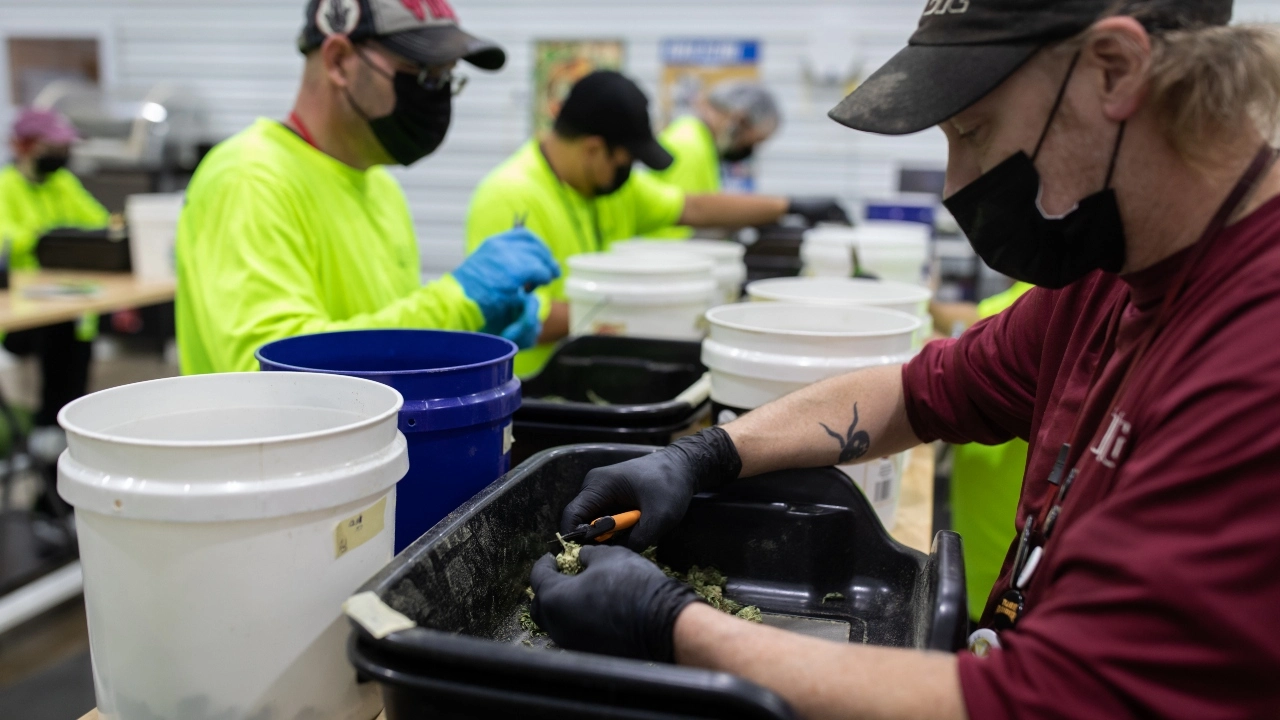

cannabis culture becomes visible when markets tighten and margins shrink. When cash flow tightens and teams face higher workloads, everyday habits and small decisions expose whether a company lives its stated values.
That distinction matters in a maturing cannabis industry. Early-stage firms often plaster mission statements on walls and copy value decks from peers. Those materials do not create culture. Culture forms through repeated behaviors: how teams share information, how leaders handle mistakes, and how people treat one another when pressure rises.
I experienced that firsthand. Before my company operated across multiple states, our headquarters was a kitchen table with four people building a business from scratch. That setting forced one test: could I trust the people at that table enough to invite them into my home? If not, I would not trust them to build the company. That expectation shaped hiring choices and team norms as we scaled.
Authentic versus manufactured culture
Organizations often try to define culture with language—values on slides, slogans in onboarding. Those words matter only if daily actions match them. In practice, authenticity shows in measurable behavior: how often teammates exchange status updates without prompting, how quickly a reported problem is escalated, and whether ownership lands at the right level.
You can measure cultural signals. Track the number of cross-team knowledge shares per month, count unresolved issues older than 14 days, or measure how many decisions are delayed for managerial approval versus resolved by frontline staff. When these metrics trend in the right direction, teams execute more predictably under stress.
We adopted a simple internal principle: no drama. That principle does not mean avoiding difficult conversations. It means keeping them focused and brief: state the issue, propose options, assign an owner, and set a 48-hour follow-up. When a 48-hour rule becomes standard, trust improves and issues stop compounding.
How culture diverges from operations
In growth periods, many firms look similar on paper. Revenue growth and expanding store counts can mask weak communication and brittle processes. When market conditions reverse, differences are clearer. Teams revert to habits formed during calmer times.
In one company example I observed, leadership continued adding product lines and retail hours while internal reporting lagged. When sales dipped 12% quarter over quarter, the lack of timely data and unclear ownership turned a manageable inventory imbalance into a three-week stockout that cost estimated lost sales of 8% for that retail region. The root causes were behavioral: teams delayed sharing inventory exceptions and managers waited for consolidated reports instead of acting on local signals.
By contrast, teams that institutionalize simple routines recover faster. Practical steps we used include daily 15-minute standups focused on three items (yesterday’s results, today’s priorities, blockers), and a weekly 60-minute cross-functional review that logs decisions and owners. Those routines reduced decision lag and helped us spot margin pressure early.
Decide what you will not do
Another measurable cultural lever is focus. Trying to be everything to everyone reduces output quality. We narrowed product focus to flower-first and reduced peripheral SKUs to concentrate staff time on supply chain, quality, and retail execution. That choice required the team to say no repeatedly and to redirect budget and headcount toward core activities. Saying no applied discipline across hiring, marketing campaigns, and retail assortment.
Leadership builds culture through action
Leaders shape culture by modeling behaviors they expect. If leaders ask for open communication but close off feedback channels, teams stop speaking up. If leaders demand accountability but do not accept responsibility for mistakes, teams disengage.
Concretely, leaders can commit to three measurable practices: host a weekly open forum where any employee can raise issues with a guarantee of a written response within five business days; publish a rolling list of decisions with owners and deadlines; and run quarterly anonymous surveys with at least a 60% response rate to track perceived trust and clarity. Those practices create data you can act on.
Give autonomy with clarity
We aimed to reduce micromanagement by clarifying expectations and giving teams tools to act. Clear job charters, decision matrices, and a shared dashboard of key performance indicators shortened approval cycles. When people had ownership of measurable targets—for example, a retail manager responsible for a 6% same-store sales lift or a cultivation lead accountable for 95% harvest yield targets—performance improved and morale rose.
Culture is fragile
Culture takes time to build and can erode quickly. Small choices compound: who gets praise publicly, which failures are tolerated, whether information flows upward. Track changes with simple metrics—turnover rate by team, average time to resolve escalations, and frequency of cross-functional knowledge shares—to detect slippage before it accelerates.
Every cannabis company has culture. The practical question executives should ask is what daily behaviors their teams default to when no one is watching. That is the behavior customers, regulators, and investors will see when the market turns downward. Focus on measurable routines, assign clear ownership, and let everyday actions define your culture rather than leaving it to slogans on a wall.
Sarah Strickler is co-founder and chief community officer of Grown Rogue International Inc., a publicly traded, flower-focused cannabis company headquartered in Oregon.