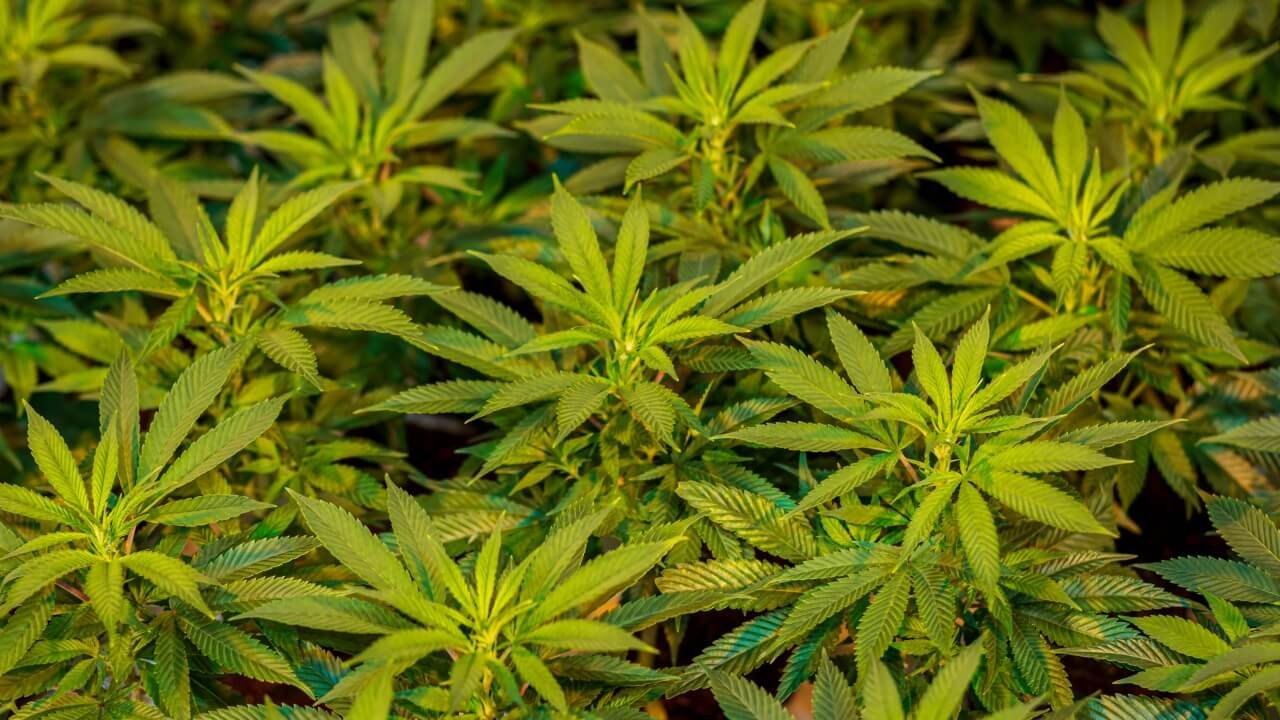

Innovative Industrial Properties Inc. (IIPR) owns a greenhouse leased to a licensed operator that functions as a medical cannabis cultivation, processing and compliant storage site under a long-term triple-net lease. The site is built for industrial-scale production rather than retail. IIPR retains ownership of the land and building; the tenant covers taxes, insurance and maintenance and pays rent with contractual escalators and extension options.
The building sits low and wide on its lot behind perimeter fencing and discreet signage. Exterior glazing admits diffuse light to the main cultivation span while HVAC units and a network of ventilation fans control internal climate. Inside, the layout separates vegetative and flowering zones with partitions, light baffles and access-control doors so each room can run on its own humidity, temperature and CO2 setpoints.
Lease structure and cashflow: IIPR uses triple-net leases to isolate landlord income from onsite operating costs. Under that arrangement the tenant assumes direct responsibility for property taxes, insurance and routine maintenance. The Greenhouse Cannabis Facility carries a long initial lease term with tenant extension rights and periodic rent escalators. For investors, that produces predictable rental receipts tied to the company’s asset base; for the tenant it creates a fixed site footprint for cultivation and processing.
Environmental systems and controls: The facility relies on ceiling-mounted HVAC, side-wall ventilation and distributed fans to maintain a consistent breeze across the canopy. Grow operations use high-efficiency LED lighting to lower heat load compared with legacy high-pressure sodium lighting. Control-room touchscreens display day-night temperature profiles, irrigation volumes and fertigation cycles so technicians can verify that automated runs completed as expected. Drainage from irrigation is routed to treatment units for partial recirculation, cutting fresh-water demand and reducing wastewater volume.
Security and compliance: The site combines physical and electronic security to meet state licensing conditions. Security measures include perimeter fencing, badge-access doors, CCTV coverage and restricted public signage. Compliance staff review access logs and camera footage to document every movement of plant material from cultivation benches to trimmed product. That documented chain-of-custody supports audit requirements imposed by regulators.
Operations and staff workflow: The interior is arranged around production needs rather than visitor access. Straight aisles and steel benching prioritize clear movement for cultivation technicians. Break rooms and hand-wash stations are positioned near work zones to reduce time away from production. On the processing line, anti-fatigue mats and ergonomic trimming tables reduce physical strain during long shifts. Fans and pumps are placed to keep background noise below levels that would disrupt concentration.
Tenant-driven layout: Cultivation directors typically dictate room zoning and equipment placement. In practice that means separate climate envelopes for propagation, vegetative growth and flowering, with staff swiping badges to pass between zones. The facility’s fixed security thresholds and door sizes require planning to relocate heavy equipment; operators factor that constraint into capital-equipment purchases and production scaling plans.
Energy and sustainability measures: Tenants increasingly install LEDs and closed-loop water systems. LEDs reduce heating loads and electrical draw per photon compared with HPS fixtures, lowering HVAC burden. Treated irrigation runoff is reused for substrate wetting and non-contact cleaning in some operations, decreasing mains water consumption. These measures reduce operating expenditure for tenants, which in turn supports the tenant’s ability to meet rent obligations under the triple-net lease.
Market and access: The Greenhouse Cannabis Facility operates within a U.S. state medical cannabis program and is not open to retail customers. It is not marketed or sold in Germany or through consumer channels such as amazon.de. Access to the site comes through the licensed tenant under the lease; European investors can obtain exposure by holding IIPR stock, which trades on the New York Stock Exchange in U.S. dollars (ISIN US45781V1017).
Limitations: The building favors regulated production over aesthetics. Natural light is optimized for photosynthesis, not visitor comfort, and plant and processing odors can be strong on busy harvest days. The fixed zoning and security checkpoints limit ad hoc reconfiguration; moving large equipment between rooms requires pre-planning and may involve temporary shutdowns.
How it fits IIPR’s portfolio: Innovative Industrial Properties focuses on acquiring and owning specialized industrial real estate used by licensed cannabis operators, then leasing those assets back under long-term contracts. The Greenhouse Cannabis Facility exemplifies that model: a purpose-built cultivation and processing site that generates contractual rental income while the tenant performs day-to-day cultivation and compliance functions.
Investor note: For shareholders, facilities like this translate to rental cashflow streams that support company dividends and future acquisitions. The building itself is not an investment product for consumers; its value to investors appears through IIPR’s financial statements and share price movement on the NYSE. This article summarizes features seen at a typical IIPR greenhouse and does not recommend buying or selling securities. Verify all investment choices with licensed financial advisors.