
Indiana’s cannabis industry rests on the 2018 federal Farm Bill definition that classifies hemp as cannabis with 0.3% delta-9 THC or less by dry weight. That federal threshold lets businesses sell products that contain intoxicating THC compounds under a hemp designation even though marijuana (higher than 0.3% delta-9) remains illegal in the state.
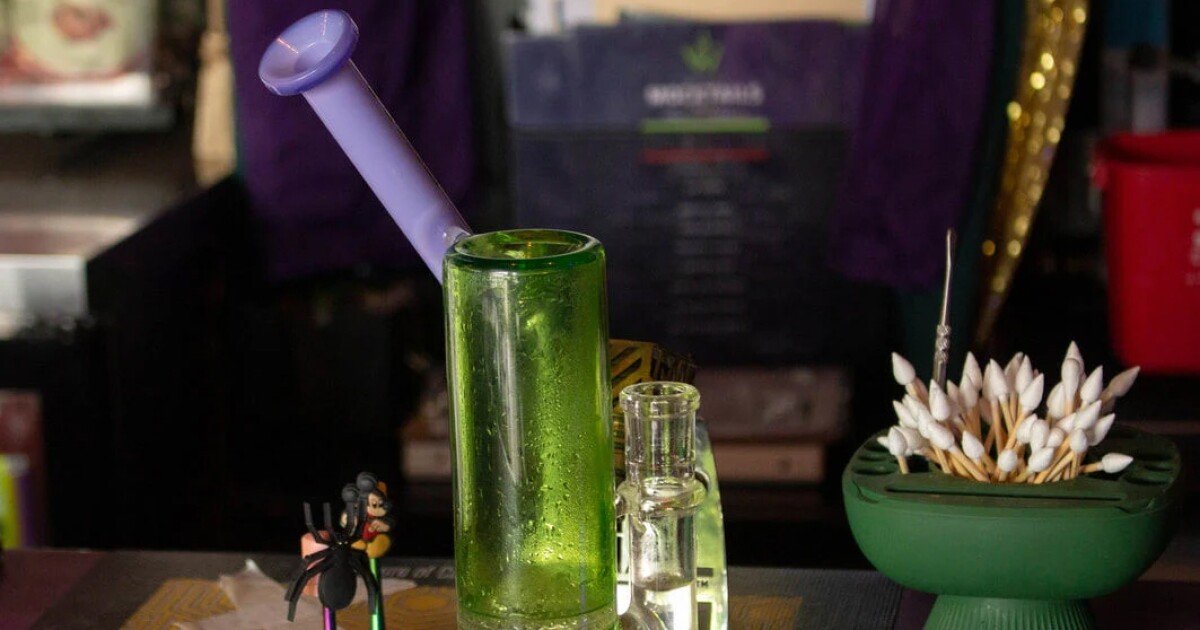
At WildEye Cannabis in Indianapolis, owner Nicholas Brown operates an alcohol-free consumption lounge that serves THC-infused mocktails, dabs and edibles. “We create a third space for people that is alcohol free,” Brown said, describing a daytime and evening venue that looks like a bar but serves hemp-derived THC products instead of beer. WildEye is one of hundreds of Indiana retailers that rely on the Farm Bill distinction to sell consumable hemp products.
Three of Indiana’s four neighboring states have legalized recreational cannabis and the fourth, Kentucky, allows medical use. That regional context and the rise of hemp-derived THC products prompted state lawmakers to consider Senate Bill 250 earlier this year. SB 250 aimed to limit availability and change oversight: key provisions included age restrictions, matching Indiana’s per-container THC limit to the federal standard, licensing retail through the Indiana Alcohol and Tobacco Commission (ATC), and creating a process for a state vote if marijuana becomes legal federally.
SB 250 passed the Senate 35–13 but never reached the House floor before the legislative session ended, so it died. Had it passed, retailers selling hemp flower and many hemp products would likely have been required to change operations or leave the state.
Business owners and producers testified against the bill during committee hearings. Robert Theodorow, owner of Generation NA in Lafayette, told the House Courts and Criminal Code Committee that his nonalcoholic bottle shop and other retailers would have to leave Indiana. Meredith Barnett of Mellow Mood Hemp Co. said SB 250 would remove soaps, lotions and beverages from the market and cost families their livelihoods. Jack Babcock, whose company produces a THC seltzer, said the bill would force his business to relocate.
Supporters of SB 250 framed the bill as public-safety regulation. Kim Sexton Yager of the Indiana Drug Enforcement Association told lawmakers she sought “meaningful guardrails” for psychoactive substances. Senator Aaron Freeman, one of the bill’s sponsors, described its practical aims as restricting youth access, aligning container limits with federal rules, and placing oversight with a state licensing agency rather than leaving hemp products largely unregulated.
Legal complexity compounds the debate. The Farm Bill placed CBD and hemp-derived products under federal jurisdiction for certain purposes, but the U.S. Food and Drug Administration has not issued comprehensive consumer-facing regulations for consumable hemp products, leaving manufacturers and retailers to operate in a gray area. Justin Swanson, managing director for government and state relations at Bose Public Affairs, noted Indiana law already bans retail sales of smokable hemp flower; beyond that, many hemp products remain legal under current state law.
Advocates and some industry players want clearer state regulation rather than an outright ban. Lucy Luman, chair of Indiana’s state chapter of NORML, argues that lawmakers use inaccurate terminology in bills and that oversight through a dedicated cannabis commission would be better than assigning authority to the ATC. “Indiana has become what they call the Wild West of hemp,” Luman said, emphasizing the need for rules that reflect how products are produced and sold.
Agriculture stakeholders point to different opportunities. Purdue University’s hemp extension program, led by Marguerite Bolt, reports hundreds of acres of hemp are already planted in Indiana. Bolt said the state has the climate and soil to grow hemp but lacks processing infrastructure for grain and fiber. Current capacity favors CBD extraction; processors for hemp grain (a food source) and fiber (textiles, construction materials) remain scarce. Bolt said developing processing facilities near Indiana would reduce shipping costs for farmers and give them more profitable options beyond THC or CBD.
The economic stakes are concrete: without state regulation that clarifies what is allowed, retailers selling hemp-derived THC risk losing inventory and market access if lawmakers tighten rules. Conversely, heavier restrictions could push manufacturers and retailers to relocate to neighboring states where recreational markets are established. Industry representatives asked lawmakers for licensing frameworks, age checks, product testing and labelling rules that would keep products in-state while imposing controls they say would protect minors and public safety.
For now the status quo continues: hemp products under the 0.3% delta-9 threshold remain legal to sell in many forms, and retailers such as WildEye remain open. The issue is likely to return to the Statehouse. Lawmakers face competing pressures: Republican supermajority politics and historical conservative attitudes toward substance regulation on one hand, and small-business losses and farm diversification concerns on the other.
Nicholas Brown framed the choice simply: legalize and regulate, tax sales and use revenue for public projects. “We can grow all these different products right here,” he said, arguing that regulation and taxation could fund infrastructure repairs. Without a clear, statewide regulatory framework, businesses, farmers and regulators will continue to operate in a legal and operational gray area while neighboring states expand legal markets.