
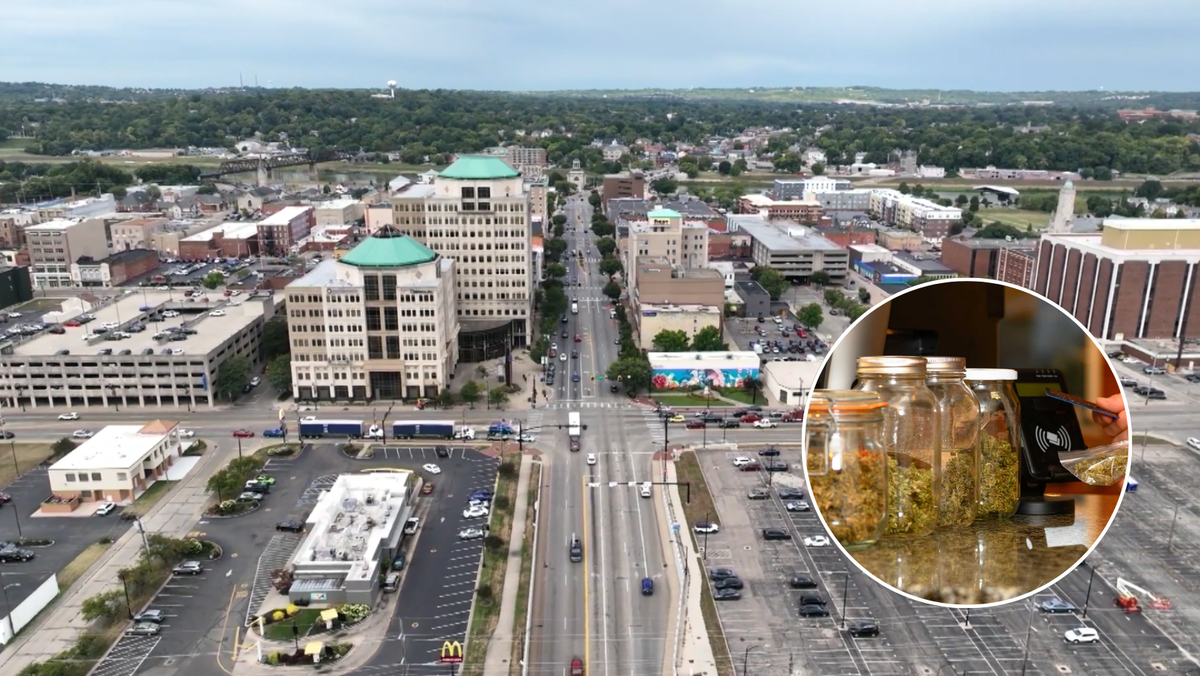
Hamilton could soon allow cannabis dispensaries after City Council advances a zoning change that the council will vote on Wednesday. The ordinance would permit cannabis dispensaries only in designated commercial areas, impose a 1,000-foot buffer from schools and childcare facilities, ban sales in the city’s local historic district and would take effect 30 days after approval.
City Council held two public hearings to collect resident comments and public input before drafting the ordinance. Under the proposed rules, one of the specific corridors under consideration runs between Hancock Avenue and South Erie Boulevard. The proposal replaces a longstanding city ban on dispensaries with a controlled, location-specific approach.
Planning Director Lauren Nelson framed the measure as a land-use decision rather than a tax policy item. Nelson told council members the city is following the same zoning process it uses for other uses, even though cannabis dispensaries have generated more public attention. She said the ordinance imposes local limits that are stricter than state law; for example, the 1,000-foot buffer exceeds the minimum distances some state rules allow.
Key provisions – Location limits: Dispensaries would be allowed only in designated commercial zones and specific corridors, including the Hancock Ave. to South Erie Blvd. stretch under review. – School and childcare buffers: Facilities must sit at least 1,000 feet from public and private schools and licensed childcare centers. – Historic district ban: Sales would be prohibited inside Hamilton’s local historic district. – Effective date: If council approves the ordinance, it becomes law 30 days after passage.
Council schedule and procedure Council meets at 6 p.m. Wednesday for the vote. The city followed standard zoning procedures: public notice, hearings, and presentation by the planning department. If council adopts the ordinance, applicants seeking to open dispensaries will still need to meet state licensing requirements and any additional local permitting or occupancy rules.
Local context and fiscal impact Hamilton has kept dispensaries off the map for years. Nearby municipalities that permitted dispensaries—Monroe, Oxford and Seven Mile—reported new local revenue and business activity after allowing licensed cannabis retailers. The Hamilton proposal avoids direct tax-rate changes and focuses on where dispensaries may locate; any tax or fee revenues produced by future dispensaries would result from separate fiscal decisions.
Regulatory implications The ordinance gives Hamilton tighter local controls than existing state statutes in several respects. The 1,000-foot school buffer and the historic district ban are local zoning tools intended to shape where retail cannabis can operate without altering state licensure rules. City staff emphasized that local approval of zoning creates the opportunity for dispensaries; it does not guarantee state licensing or immediate retail openings.
What to expect next If council approves the ordinance Wednesday, potential operators can begin identifying available sites within permitted zones and prepare state licensing applications. City staff and council will likely field permit and compliance questions as applicants move forward. If the ordinance fails, the municipal ban would remain in place and dispensaries would continue to be prohibited under local rules.
Bottom line The vote will decide whether Hamilton replaces a long ban with targeted zoning that allows cannabis dispensaries in limited parts of the city under stricter local conditions than state law. Residents and prospective operators will see concrete effects—site eligibility, buffer distances and a 30-day enactment timetable—if council approves the measure at 6 p.m. Wednesday.