
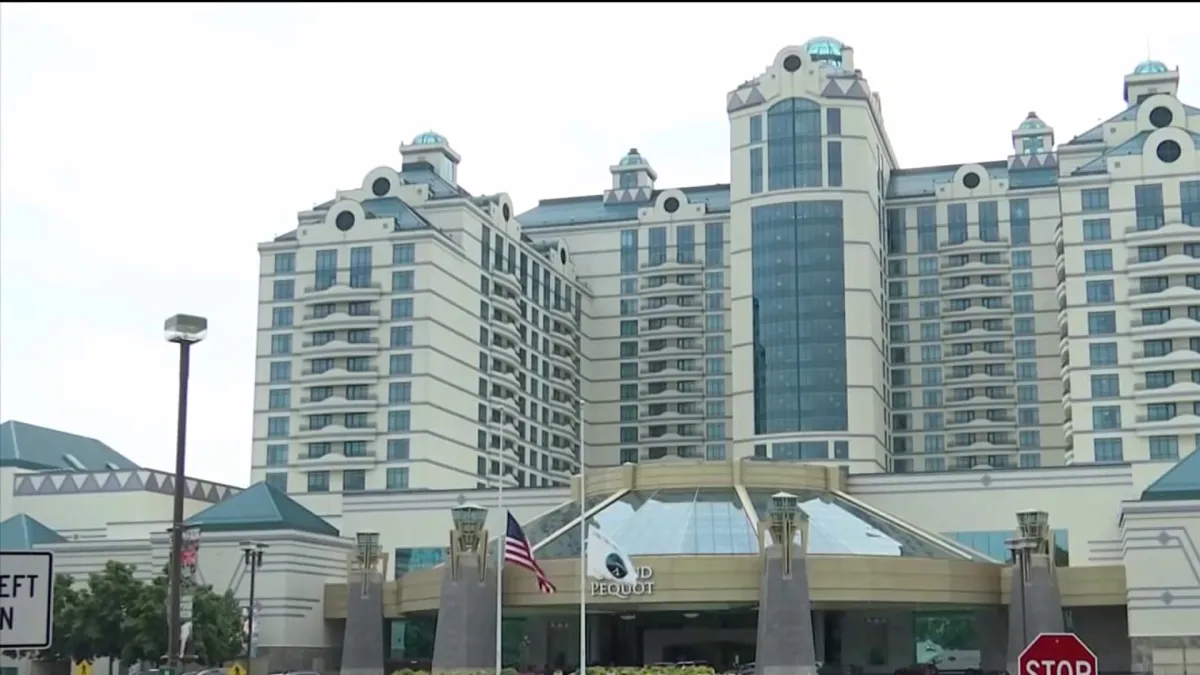
connecticut cannabis compact between the state and the Mashantucket Pequot tribe lets tribal businesses join Connecticut’s regulated adult-use market and requires the tribe to follow key state cannabis statutes.
Governor Ned Lamont announced the agreement on Thursday, describing it as a framework for cooperation on cannabis regulation on tribal lands and in state jurisdictions. The compact gives the tribe the option to license cultivators, manufacturers and retailers that can operate inside the state’s regulated marketplace and transact with other state-licensed businesses.
The compact cites specific state rules for cultivation, product manufacturing and the sale of both medical and recreational cannabis. It also allows the Mashantucket Pequot tribe to approve a cultivation facility of up to 250,000 square feet on tribal land — a concrete capacity that could support large-scale greenhouse or indoor operations.
Under current Connecticut law, cultivators, manufacturers and retailers may do business only with in-state entities. By recognizing tribal-licensed businesses as eligible participants in the state market, the compact explicitly enables those businesses to sell products to state licensees and to receive products from them. Tribal leaders said the arrangement continues a government-to-government relationship with the state while opening “the door to future commerce between tribally-licensed cannabis businesses and state licensees,” according to Chairman Rodney Butler.
Quinnipiac University professor emeritus Patricia Luoma emphasized the importance of consistent rules across sales channels. “You do want to have a level playing field between cannabis purchased off the tribal property and on,” Luoma said. The compact attempts to create that uniformity by tying tribal licensing and operations to specified state statutes.
The agreement permits on-site consumption in a cafe or lounge on tribal land, consistent with Connecticut policy that allows licensed consumption spaces. That provision lets tribal enterprises offer a customer experience similar to state-licensed venues while operating under tribal jurisdiction.
Agricultural capacity underpins some of the compact’s practical potential. Shuresh Ghirmire, a hemp specialist with the University of Connecticut Extension program, noted the tribe’s track record in multiple cultivation systems: field production, high-tunnel structures and hydroponic greenhouses. Those existing operations could reduce start-up time and technical risk if tribal licensees pursue large indoor or greenhouse cannabis cultivation.
The compact preserves tribal sovereignty: it does not require the tribe to relinquish its authority to set its own laws. Instead, it records mutual agreement that tribal businesses choosing to participate in the statewide market will follow designated state statutes for licensing and operations. That creates a pathway for mixing tribal jurisdiction over land with enforceable obligations tied to Connecticut’s regulatory framework for product safety, testing, packaging and sales.
Legal and commercial effects are concrete. A tribal-approved cultivator up to 250,000 square feet could produce output at a scale comparable to some mid-size commercial operations in the state. Participation in the state market allows those products to move through existing distribution and retail networks without requiring separate interstate arrangements. For consumers, the compact aims to align product standards and sales practices so that cannabis purchased on tribal land meets the same regulatory requirements as cannabis sold elsewhere in Connecticut.
Economic impacts depend on implementation choices and market response. Tribal leaders framed the agreement as expanding commerce opportunities for the tribe and for state licensees. State officials framed it as cooperation that protects public health and safety by aligning regulatory requirements. A Mohegan tribe spokesman declined to comment.
Key next steps include tribal licensing procedures, inspection and compliance plans, and how the state will monitor alignment with its statutes. The compact sets a legal basis for those arrangements but leaves operational details to follow. Observers will watch how quickly the tribe approves businesses, which types of operations it prioritizes (cultivation, manufacturing, retail, or on-site consumption), and how those businesses integrate with Connecticut’s licensing and testing infrastructure.
By defining a specific cultivation cap and listing the state statutes to be observed, the compact creates measurable parameters for regulators, industry participants and community stakeholders. The agreement offers a template for how a state and a sovereign tribe can coordinate cannabis commerce while maintaining tribal legal autonomy.
Governor Lamont and tribal leadership framed the compact as the start of practical cooperation on cannabis regulation and commerce. The compact gives tribal enterprises an option to operate within Connecticut’s regulated adult-use market, provides a statutory framework for product and sales standards, and specifies a 250,000-square-foot cultivation ceiling as a measurable limit for large production facilities.