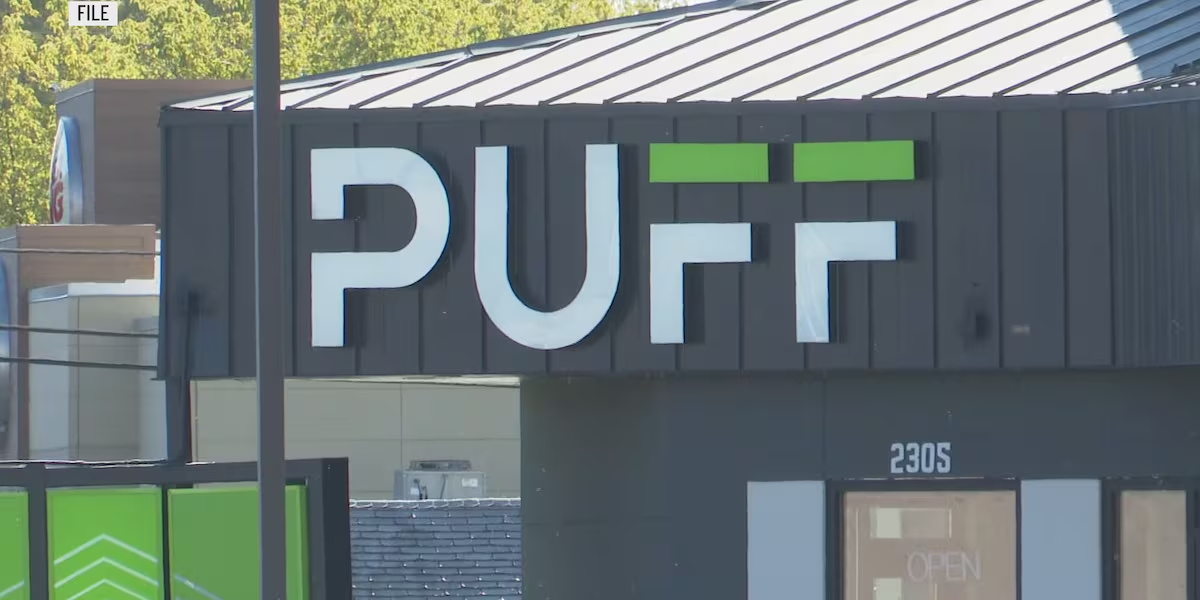
puff cannabis owner Nick Hannawa will return to court in July to ask a judge to reconsider a ruling that dismissed his dispensary’s lawsuit against the city of Menominee. Hannawa says he invested $5 million preparing to open the Puff Cannabis store on 10th Street and will pursue appeals if the trial-court decision is not reversed.
The legal dispute centers on two issues: a waiver included in Puff Cannabis’s updated recreational marijuana application and a voter-approved city ordinance that capped Menominee dispensaries at nine. Puff Cannabis filed under the name First Class Cannabis Company in December 2024 without the waiver language, but submitted a new application in February 2025 after a company name change. That updated application included a waiver stating applicants permanently release the city, elected officials and employees from legal claims related to the licensing process.
Attorney Jennifer Green argues the waiver is unconstitutional. She told the court the language requires applicants to surrender their First Amendment right to seek redress in court and bars other legal claims against the city for violating its own laws. Green also plans to challenge the November 2025 ordinance that limits the number of dispensaries to nine, saying the ballot process and the ordinance’s effect on applicants violated city code and removed vested rights of businesses that had already invested and followed licensing rules.
At the time Menominee voters approved the cap, eight dispensaries were already operating. Puff Cannabis was denied a final license after the cap took effect. Hannawa says the earlier city rules had no limit on the number of dispensaries and that his company proceeded in good faith under that unlimited framework.
Hannawa is seeking either a reversal of the dismissal or a negotiated settlement. He has publicly argued that prolonged litigation will cost the city time and money and that residents do not want years of legal battles. “Puff’s not going to be able to just walk away from a $5 million investment,” he said. “We need to continue fighting and we’d have to go on to the Court of Appeals and past that point if necessary.”
The city has declined to discuss the case while litigation is pending. The Menominee city manager provided a statement relaying the city’s legal team advice: the city does not comment on active legal matters.
Court records show Puff Cannabis’s complaint alleged procedural problems in the licensing process and challenged the validity of the waiver and the voter-approved cap. The trial court dismissed the suit; Hannawa’s team filed a motion for reconsideration and will present arguments in July. If the trial judge denies the motion, Hannawa’s lawyer has said an appeal to the Michigan Court of Appeals is likely.
Concrete legal claims include: (1) the waiver’s enforceability under state and federal constitutional protections; (2) whether the November 2025 ballot initiative complied with city charter and ordinance procedures; and (3) whether applicants who had pending licenses at the time of the cap possess vested rights that the ordinance improperly removed.
If the waiver is ruled invalid, applicants could resume litigation challenging licensing decisions. If the ordinance is overturned on procedural grounds, the city could face orders to reinstate or re-evaluate pending applications. Either outcome would affect the local market: Menominee had eight active dispensaries when voters approved the cap, and a ruling for Hannawa could allow at least one additional license to proceed, altering the number of legal operators and potential local tax revenues tied to cannabis sales.
Hannawa and Green emphasize they prefer settlement over lengthy appeals, but say they will continue legal action to protect the company’s financial stake. The case raises legal questions other Michigan municipalities may watch closely: whether local licensing conditions can require applicants to waive the right to sue, and how retroactive regulatory caps affect businesses that invested under earlier rules.
A July hearing will address the motion for reconsideration. If the judge maintains the dismissal, Hannawa’s team has indicated they will file an appeal. The case timeline so far: initial application in December 2024, name-change application with waiver in February 2025, voter-approved cap in November 2025, and the current court action scheduled for July 2026.
The outcome will determine whether Puff Cannabis can proceed toward opening, whether the city’s waiver language remains in force for other applicants, and whether Menominee’s nine-dispensary cap survives further legal scrutiny.