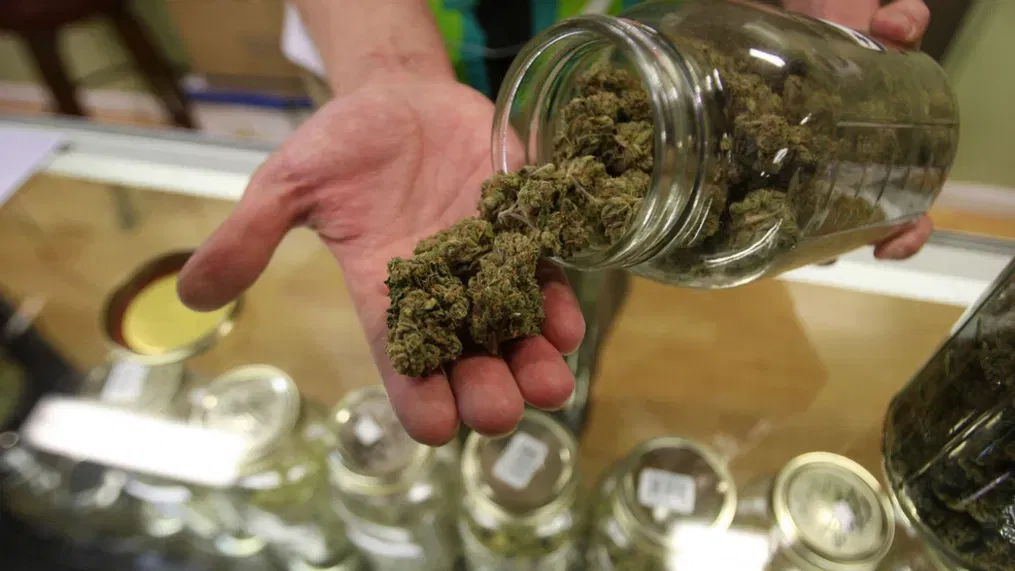
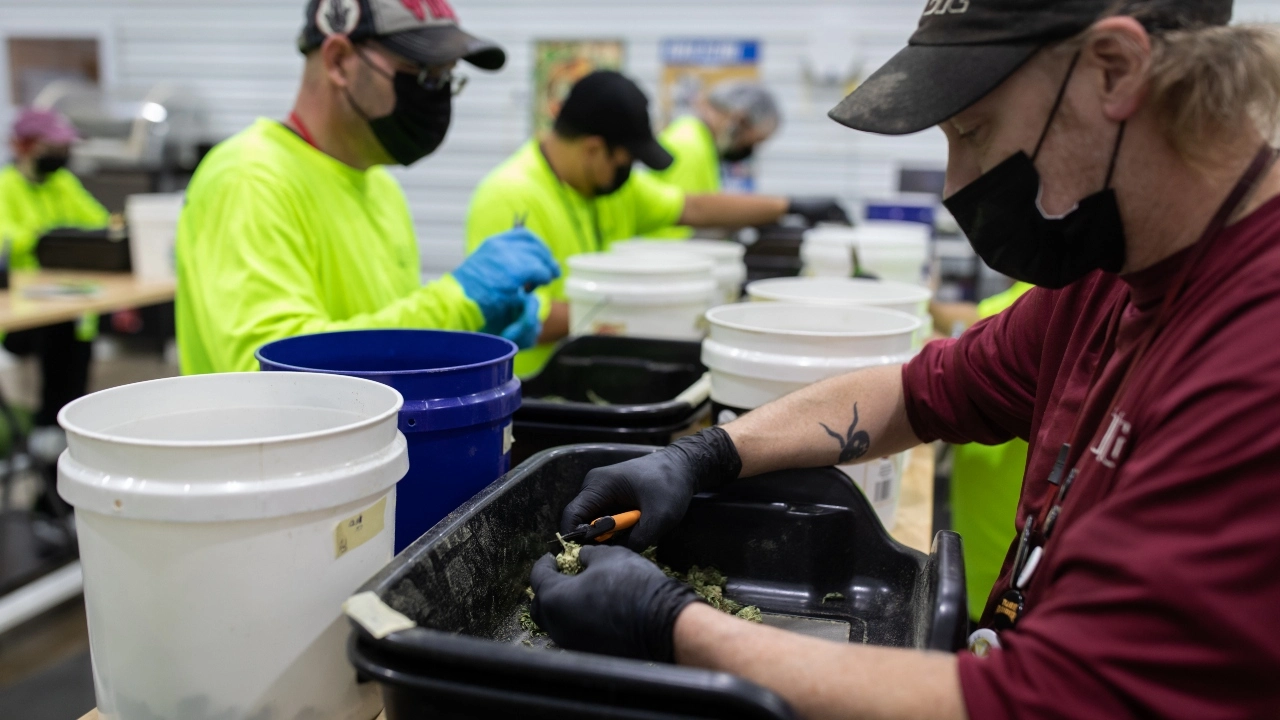
The legal cannabis industry employed 412,500 people in early 2026, a 2.7% decline from 425,002 a year earlier, according to the U.S. Cannabis Jobs Report 2026 from staffing firm Vangst and Whitney Economics. Annual legal retail revenue fell to $29.1 billion in 2025, the first year-over-year drop since adult-use sales began in 2014.
The report links the workforce decline and revenue contraction to market maturity, falling wholesale prices and persistent oversupply in several states. Wholesale price compression has pushed some prices below producers’ costs, forcing operators to cut staff, close facilities or seek productivity gains rather than add payroll.
Price and demand changes Wholesale and retail prices have fallen enough to reduce the value of a typical shopper basket. Whitney Economics estimates a basket that cost about $150 three years ago now costs roughly $97. Consumers continue to buy, but lower prices shrink revenue per transaction. At the same time, operators are facing higher expenses for fuel, utilities, labor and professional services, squeezing margins.
States and job shifts The jobs shift follows a geographic and maturity split. Mature markets that already converted large shares of legacy demand into regulated sales are contracting or flattening, while newer markets that are still expanding retail access are adding staff.
– California employed an estimated 57,500 people and remains the largest single-state employer, but its workforce contracted as oversupply and new taxes pushed operators to cut costs. – Michigan employed about 42,500 and also recorded declines. – New York more than doubled its legal cannabis workforce, adding 16,160 jobs (a 129% increase) to reach roughly 28,660 employees, becoming the nation’s third-largest cannabis employer. – Maryland added about 3,500 jobs. – Ohio added roughly 2,596 jobs.
Vangst’s chief business officer Ryan Rosenfeld described the trend as a maturity story: operators in growth markets should hire conservatively and apply discipline learned in mature states to avoid overbuilding.
Market capture and illegal channels Legal sales now capture roughly 30% of total U.S. cannabis demand, the report estimates. That leaves most consumer activity, and associated jobs, in unregulated channels where employers often pay in cash and do not collect taxes. Converting that illicit demand into regulated sales remains the primary way to expand legal market jobs and tax receipts.
Federal policy as a wildcard Federal rescheduling or descheduling of marijuana represents the largest policy variable for future employment and capital flows. Moving adult-use cannabis from Schedule I to Schedule III could remove or reduce the tax burden imposed by Internal Revenue Code Section 280E, freeing up capital for debt repayment, marketing, price reductions or expansion. Whitney Economics estimates full descheduling could support as many as 1.6 million workers in the industry.
However, rescheduling is not a simple fix. The Department of Justice’s April order that recognized medical cannabis as a federally accepted medicine while leaving adult-use programs under state law would create a dual system. Schedule III treatment could channel some sales through DEA-registered pharmacies under licensed pharmacists’ oversight. That regulatory configuration could limit traditional dispensary sales and require many producers and manufacturers to meet Good Manufacturing Practice (GMP) and Good Agricultural Practice (GAP) certification standards. Smaller operators may be unable to absorb the certification costs amid continued price pressure.
Pricing and medical channel dynamics If medical cannabis carries a higher price than adult-use products, patients and consumers are unlikely to move from adult-use to medical channels unless payers — for example, insurers — cover medical cannabis. Insurance reimbursement for medical cannabis would create a clear incentive to enroll patients in medical programs and could shift purchase patterns.
Outlook The report frames the recent job decline as part of a transition from rapid early growth to a more mature consumer market. In mature states, operators are trimming staff and focusing on cost control; in new markets, employment still rises as retail networks expand. Federal policy changes, retail access expansion in growth states and progress converting illicit demand into regulated sales will determine whether U.S. legal cannabis employment rebounds or continues to consolidate.
Source: U.S. Cannabis Jobs Report 2026, Vangst and Whitney Economics. For further reporting, contact Margaret Jackson at margaret.jackson@mjbizdaily.com.