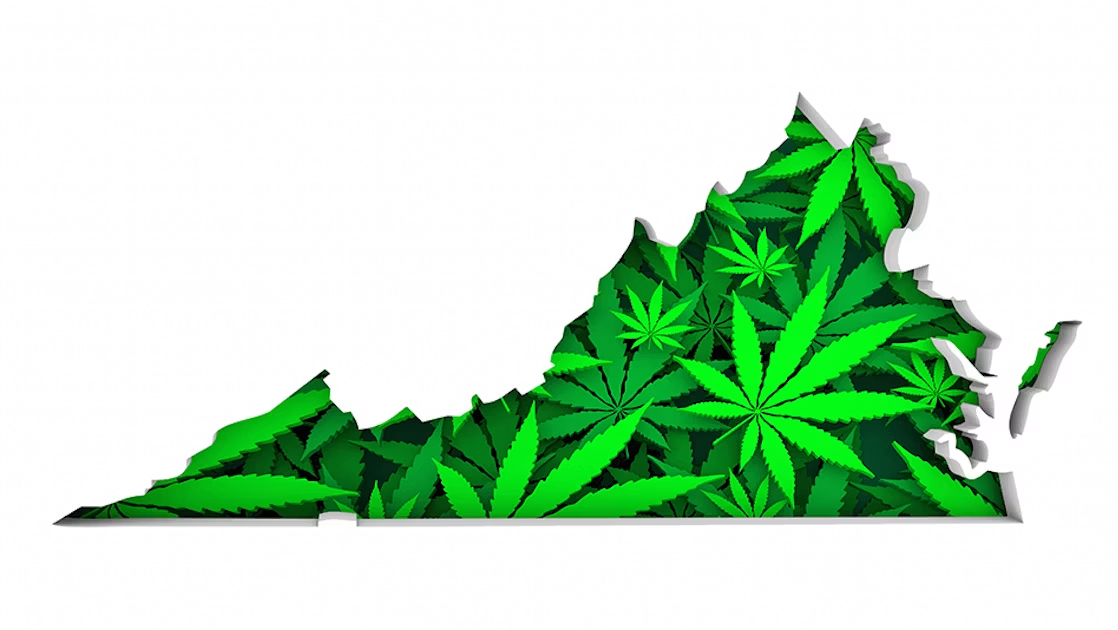
Virginia lawmakers on June 22 approved a budget conference report that sends cannabis legalization to Gov. Abigail Spanberger and sets a regulated adult-use marketplace that begins July 1, 2027.
The Senate approved the budget report 23-16 and the House 71-22. Under the compromise, adults 21 and older can legally purchase cannabis from licensed dispensaries starting July 1, 2027. The law raises the legal possession limit from 1 ounce to 2 ounces for adults and preserves home cultivation rules established in 2021 (up to four plants per household).
Tax, retail limits and timeline – The compromise sets a 6% excise tax on dispensary sales, with an automatic increase to 8% on July 1, 2029. – The state may license up to 350 dispensaries across Virginia. – Local governments may not opt out of allowing adult-use cannabis businesses to operate in their jurisdictions.
Licensing, medical conversion and fees – Existing medical cannabis operators can convert to dual-use licenses through a one-time $10 million conversion fee. Operators may pay the fee in full by May 1, 2027, or seek an approved installment plan. – The Virginia Cannabis Control Authority (CCA) must deposit 75% of all licensing fees collected between May 1, 2027 and May 1, 2028 into the Cannabis Equity Business Loan Fund. That fund is designated to provide technical assistance and capital to entrepreneurs from communities disproportionately affected by cannabis prohibition. – Net excise-tax revenues, after covering CCA expenses, will fund a Cannabis Equity Reinvestment Fund, the Department of Behavioral Health and Developmental Services, public health programs, and childcare and education. The governor removed the specific percentage allocations originally proposed in the legislature.
Public consumption penalties and opposition – The compromise increases the civil penalty for public cannabis consumption to $250 beginning in 2027; the current fine is $25. That change sparked opposition from 18 advocacy groups, including the ACLU of Virginia, NORML, Marijuana Policy Project and Drug Policy Alliance. Those groups argued in a June 18 letter that higher fines disproportionately harm Black and Brown communities and low-income people and can trigger collateral harms in housing, employment and immigration. – Spanberger had earlier proposed criminal penalties — a Class 4 misdemeanor for public consumption and a Class 1 misdemeanor for underage possession — but lawmakers rejected those measures in April. Sen. Lashrecse Aird (D-Henrico) criticized harsh criminal penalties as likely to reproduce harms tied to prohibition. After the compromise reduced criminal exposure, Aird said lawmakers aimed to avoid recriminalization while ensuring enforcement measures exist to deter underage sales and distribution.
Regulation of hemp and products – The bill caps total THC in consumable hemp products at 2 milligrams per package. – Regulatory authority for intoxicating hemp products moves from the Virginia Department of Agriculture and Consumer Services to the CCA, tightening oversight of hemp-derived items that deliver intoxicating effects.
Health and safety guardrails The legislation includes several measures aimed at reducing youth exposure and accidental ingestion: – Prohibits cartoon-style advertising for cannabis products. – Requires child-resistant packaging. – Bans products shaped like animals, fruit, or other forms likely to appeal to children. – Establishes a 1,000-foot buffer between dispensaries and schools, hospitals, playgrounds and drug treatment facilities. – Imposes strict penalties for sales to underage people.
Context and legislative history Virginia legalized adult possession of up to 1 ounce and home cultivation of up to four plants in 2021, but a retail market never opened. Former Gov. Glenn Youngkin vetoed previous adult-use bills, and this year’s path included several iterations: an initial bill passed in March, a governor’s substitute with amendments, and a veto in May after sponsors declined Spanberger’s changes. The budget process produced the compromise that keeps the reform alive and places the implementing language in the state’s $207 billion budget.
Stakeholder positions Gov. Spanberger framed the compromise around protecting youth and ensuring clear penalties for illicit sales to minors. “We have always shared the same priorities and goals for this marketplace, including measures to keep our kids safe once the marketplace is open,” she said at a press conference.
Del. Paul Krizek (D-Fairfax), who sponsored the lower-chamber bill, emphasized market design to shift consumers away from the illicit market and create equitable business entry. The CCA’s requirement to direct licensing fees into the Cannabis Equity Business Loan Fund aims to lower capital barriers for entrepreneurs from communities most affected by past enforcement.
Next steps The budget language now goes to Gov. Spanberger to sign. If she signs the budget, the adult-use framework and its implementation timetable — including the July 1, 2027 date for retail sales — will take effect as part of the state’s fiscal plan. Lawmakers left detailed percentage splits for excise revenues to be determined later, but they set specific allocations for licensing-fee deposits and named beneficiary programs for excise-tax net profits.
Key figures – Sales start: July 1, 2027 – Excise tax: 6% initially; 8% from July 1, 2029 – Dispensary cap: 350 – Possession limit: raised from 1 ounce to 2 ounces for adults 21+ – Medical conversion fee: $10 million one-time (or installment plan) – Public consumption fine: $250 (up from $25) – THC cap for consumable hemp: 2 mg per package – Buffer zone: 1,000 feet
The budget-driven approach keeps Virginia’s move to a regulated adult-use market on track while leaving several implementation details for the CCA and future rulemaking. Lawmakers and advocates will monitor how licensing, equity funding, tax revenue distribution and enforcement practices affect market participation and public health once sales begin in 2027.