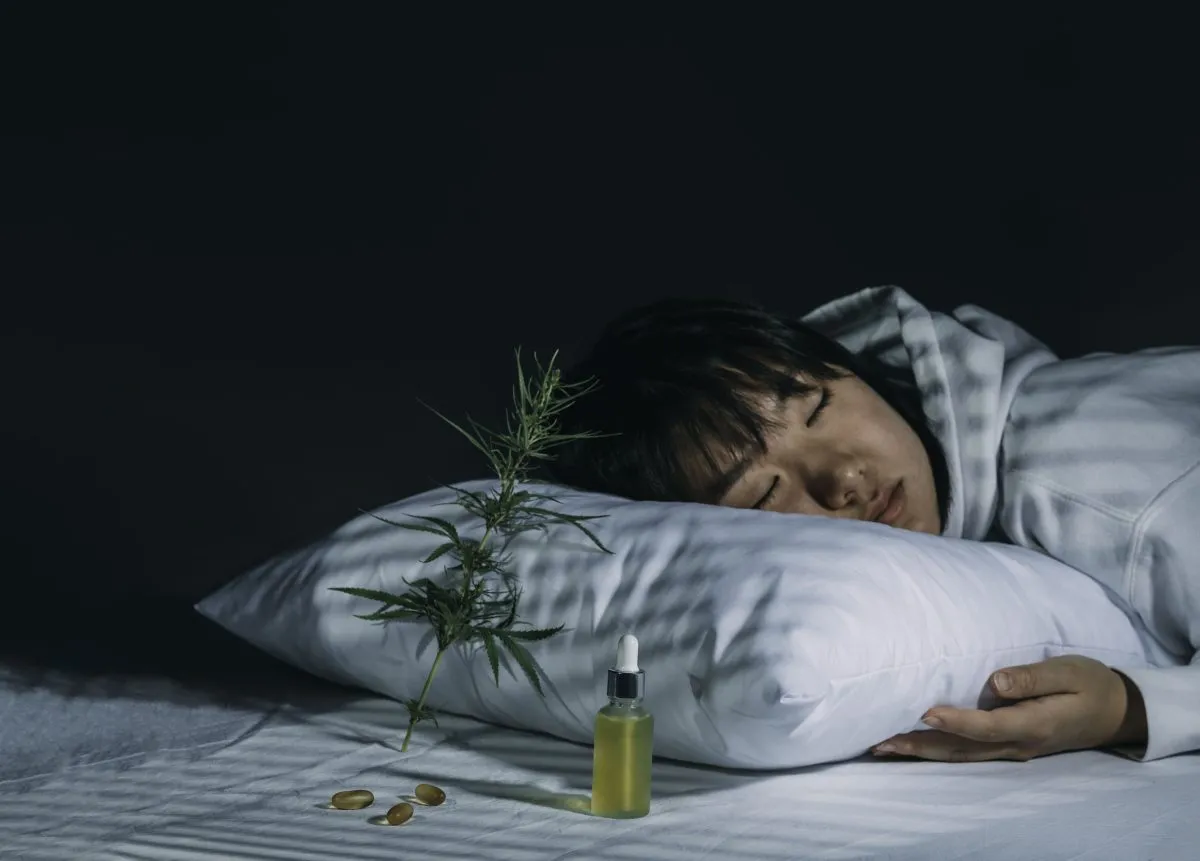
For millions of people, cannabis has become a go-to for falling asleep. Two typical cases illustrate why that choice can become harmful. A 15-year-old takes a THC gummy and falls asleep within 20 minutes after an hour of anxious wakefulness. A 34-year-old veteran with chronic nightmares uses cannabis nightly because appointments for formal care are months away. Both report immediate relief. Both can develop worse sleep and dependence over time.
How cannabis affects the sleeping brain
THC (tetrahydrocannabinol) acts on the body’s endocannabinoid system, which regulates brain development, mood and sleep. In adolescents, that system helps prune unused neural connections and strengthen circuits for judgment and emotional control. A 2021 brain-imaging study of 799 teenagers found a dose-dependent thinning of the cerebral cortex: the more cannabis used, the thinner the prefrontal cortex. Thinner prefrontal cortex tissue links to higher impulsivity and poorer decision-making.
Sleep itself is structured: the brain cycles through light sleep, deep sleep and REM (rapid eye movement) sleep. REM sleep supports emotional processing, memory consolidation and mood regulation. THC can shorten the time it takes to fall asleep at low doses, but it alters sleep architecture. Multiple studies show that chronic or bedtime cannabis use often increases wake time after sleep onset and reduces restorative aspects of sleep. A 2025 review concluded that cannabis does not reliably improve total sleep time or sleep quality across studies.
Tolerance and withdrawal drive repeated use
Short-term sedation from THC fades with repeated use. Users develop tolerance: the same dose that once induced sleep becomes less effective, and users take higher doses or use more frequently to chase the initial effect. Objective sleep measures do not match many users’ subjective sense of benefit: people report feeling they sleep better even when brain recordings show more fragmented, less restorative sleep.
When users stop after chronic use, withdrawal commonly produces the symptoms they were trying to treat. Typical withdrawal symptoms include insomnia, vivid or disturbing dreams, anxiety, depressed mood, restlessness, irritability and reduced appetite. About two-thirds of users report at least some of these symptoms after stopping. For many, withdrawal-related sleep disruption pushes them back to cannabis, creating a cycle: use to sleep → tolerance and disrupted sleep → attempt to stop → withdrawal worsens sleep → return to use.
Adolescents and young adults at higher risk
Teenagers face two converging risks. Hormonal changes and brain maturation shift adolescents’ circadian rhythms later, making them natural night owls while school start times force early wakeups. Sleep deprivation already affects many teens. Adding nightly cannabis use can create dependency because the adolescent brain remains plastic and more sensitive to substances that alter synaptic pruning. A 2025 study reported that more than 1 in 5 young adults in the United States use cannabis or alcohol to fall asleep.
Trauma, veterans and symptom overlap
Trauma amplifies both sleep problems and the risk of problematic cannabis use. Post-traumatic stress disorder (PTSD) affects an estimated 12% to 23% of post-9/11 veterans versus 6% to 8% of the general population. Between 70% and 90% of military personnel with PTSD report sleep disturbances, often including recurrent nightmares and repeated nighttime awakenings.
Many veterans turn to cannabis because mental health appointments can take weeks or months and dispensaries are readily accessible. However, data link cannabis use disorder—defined as inability to control cannabis use despite harms—to worse mental health outcomes in veterans. About 25% of veterans who use cannabis nonmedically meet criteria for cannabis use disorder. These veterans show higher rates of depression, anxiety and suicidal thoughts and respond more poorly to evidence-based PTSD treatments.
When veterans try to stop, rebound insomnia and intensified nightmares can mimic or worsen PTSD symptoms. Because withdrawal symptoms resemble PTSD, many veterans interpret symptom return as their condition worsening and resume cannabis use, reinforcing the cycle.
What works: evidence-based treatments
Cognitive behavioral therapy for insomnia (CBT-I) is the recommended first-line treatment for chronic insomnia. Clinical trials and meta-analyses show CBT-I produces larger, more durable improvements in sleep than sleep medications and behavioral sedatives. CBT-I targets sleep habits, schedules and arousal and addresses unhelpful beliefs about sleep. For trauma-related nightmares, image rehearsal therapy—rewriting and rehearsing alternative endings to recurring nightmares—reduces nightmare frequency and distress in veterans.
CBT-I also reduces cannabis use among people who used cannabis as a sleep aid, according to randomized trials. That finding shows treating the underlying sleep disorder reduces reliance on cannabis rather than merely replacing it.
Barriers to care
Access limits undermine effective treatment. Trained CBT-I providers are scarce, wait times in many health systems extend for months, and most primary care clinics do not deliver structured CBT-I. Those constraints push patients toward readily available options: dispensaries and over-the-counter sleep aids.
Practical guidance for clinicians and users
– Screen: Clinicians should ask patients who use cannabis nightly whether they are using it to sleep and assess for withdrawal and cannabis use disorder. – Avoid abrupt quitting without support: Sudden cessation in heavy users often produces severe sleep disruption and mood symptoms. Gradual tapering combined with behavioral therapy is safer and more effective. – Offer CBT-I and nightmare-focused therapies: When available, these treatments reduce insomnia and decrease the need for cannabis. – Prioritize access: Health systems should expand training and delivery of CBT-I and evidence-based PTSD care to shorten waitlists.
Bottom line
Cannabis can reduce time to sleep for some users, but tolerance, altered sleep architecture and withdrawal commonly undermine long-term sleep quality. Adolescents and people with trauma-related sleep problems face elevated risks of developing dependence. Evidence-based behavioral therapies improve sleep and lower cannabis use, but limited access keeps many people reliant on cannabis. Clear clinical screening, supported tapering strategies and wider availability of CBT-I would reduce harm and help people recover sustainable sleep without nightly cannabis use.